<?xml version="1.0" encoding="ISO-8859-1"?><article xmlns:mml="http://www.w3.org/1998/Math/MathML" xmlns:xlink="http://www.w3.org/1999/xlink" xmlns:xsi="http://www.w3.org/2001/XMLSchema-instance">
<front>
<journal-meta>
<journal-id>0016-7169</journal-id>
<journal-title><![CDATA[Geofísica internacional]]></journal-title>
<abbrev-journal-title><![CDATA[Geofís. Intl]]></abbrev-journal-title>
<issn>0016-7169</issn>
<publisher>
<publisher-name><![CDATA[Universidad Nacional Autónoma de México, Instituto de Geofísica]]></publisher-name>
</publisher>
</journal-meta>
<article-meta>
<article-id>S0016-71692006000400001</article-id>
<title-group>
<article-title xml:lang="en"><![CDATA[Magnetic studies of natural goethite samples from Tharsis, Huelva, Spain]]></article-title>
</title-group>
<contrib-group>
<contrib contrib-type="author">
<name>
<surname><![CDATA[Chaparro]]></surname>
<given-names><![CDATA[Marcos A. E]]></given-names>
</name>
<xref ref-type="aff" rid="A01"/>
</contrib>
<contrib contrib-type="author">
<name>
<surname><![CDATA[Sinito]]></surname>
<given-names><![CDATA[Ana M]]></given-names>
</name>
<xref ref-type="aff" rid="A02"/>
</contrib>
<contrib contrib-type="author">
<name>
<surname><![CDATA[Bidegain]]></surname>
<given-names><![CDATA[Juan C]]></given-names>
</name>
<xref ref-type="aff" rid="A03"/>
</contrib>
<contrib contrib-type="author">
<name>
<surname><![CDATA[de Barrio]]></surname>
<given-names><![CDATA[Raúl E]]></given-names>
</name>
<xref ref-type="aff" rid="A04"/>
</contrib>
</contrib-group>
<aff id="A01">
<institution><![CDATA[,Universidad Nacional del Centro de la Provincia de Buenos Aires  ]]></institution>
<addr-line><![CDATA[Tandil ]]></addr-line>
<country>Argentina</country>
</aff>
<aff id="A02">
<institution><![CDATA[,Universidad Nacional del Centro de la Provincia de Buenos Aires  ]]></institution>
<addr-line><![CDATA[Tandil ]]></addr-line>
<country>Argentina</country>
</aff>
<aff id="A03">
<institution><![CDATA[,CIC- LEMIT  ]]></institution>
<addr-line><![CDATA[La Plata ]]></addr-line>
<country>Argentina</country>
</aff>
<aff id="A04">
<institution><![CDATA[,Universidad Nacional de La Plata Instituto de Recursos Minerales ]]></institution>
<addr-line><![CDATA[La Plata ]]></addr-line>
<country>Argentina</country>
</aff>
<pub-date pub-type="pub">
<day>00</day>
<month>12</month>
<year>2006</year>
</pub-date>
<pub-date pub-type="epub">
<day>00</day>
<month>12</month>
<year>2006</year>
</pub-date>
<volume>45</volume>
<numero>4</numero>
<fpage>219</fpage>
<lpage>230</lpage>
<copyright-statement/>
<copyright-year/>
<self-uri xlink:href="http://www.scielo.org.mx/scielo.php?script=sci_arttext&amp;pid=S0016-71692006000400001&amp;lng=en&amp;nrm=iso"></self-uri><self-uri xlink:href="http://www.scielo.org.mx/scielo.php?script=sci_abstract&amp;pid=S0016-71692006000400001&amp;lng=en&amp;nrm=iso"></self-uri><self-uri xlink:href="http://www.scielo.org.mx/scielo.php?script=sci_pdf&amp;pid=S0016-71692006000400001&amp;lng=en&amp;nrm=iso"></self-uri><abstract abstract-type="short" xml:lang="es"><p><![CDATA[Las propiedades magnéticas de la goethita no han sido ampliamente estudiadas. Las muestras naturales frecuentemente contienen mezclas complejas de minerales. En el presente trabajo se estudió material extraído de Tharsis (Huelva, España), con el propósito de corroborar la presencia de goethita, a partir de mediciones de magnetismo de rocas. A tal fin se realizaron mediciones de susceptibilidad magnética, magnetización remanente isotérmica (MRI), anhistérica (MRA), y se efectuó la desmagnetización por campos alternos y por temperatura. Difracción de rayos X y microscopía de barrido electrónico también fueron efectuados. Los resultados obtenidos son comparados y discutidos con relación a estudios previos de goethitas naturales y sintéticas. A partir de los estudios térmicos de MRI y no magnéticos, se observó la presencia de hematita magnéticamente más dura.]]></p></abstract>
<abstract abstract-type="short" xml:lang="en"><p><![CDATA[Magnetic properties of goethite have not been widely studied. Natural samples often contain complex mineral mixtures. Material from Tharsis (Huelva, Spain) is studied in order to corroborate the presence of goethite using rock magnetic measurements. Measurements of magnetic susceptibility, isothermal remanent magnetisation (IRM), anhysteric remanent magnetisation (ARM), and magnetic and thermal demagnetisation were carried out. X-ray diffraction and scanning electron microscopy were also carried out. The results are discussed and compared with previous studies of synthetic and natural goethites. The presence of magnetically harder hematite was observed from IRM, thermal and non-magnetic studies.]]></p></abstract>
<kwd-group>
<kwd lng="es"><![CDATA[Goethita]]></kwd>
<kwd lng="es"><![CDATA[hematita]]></kwd>
<kwd lng="es"><![CDATA[magnetismo de rocas]]></kwd>
<kwd lng="es"><![CDATA[magnetización remanente]]></kwd>
<kwd lng="es"><![CDATA[Tharsis]]></kwd>
<kwd lng="en"><![CDATA[Goethite]]></kwd>
<kwd lng="en"><![CDATA[hematite]]></kwd>
<kwd lng="en"><![CDATA[remanent magnetisation]]></kwd>
<kwd lng="en"><![CDATA[rock-magnetism]]></kwd>
<kwd lng="en"><![CDATA[Tharsis]]></kwd>
</kwd-group>
</article-meta>
</front><body><![CDATA[ <p align="justify"><font face="verdana" size="4">Geof&iacute;sica internacional</font></p>     <p align="justify"><font face="verdana" size="2">&nbsp;</font></p>     <p align="center"><font face="verdana" size="4"><b>Magnetic studies of natural goethite samples from Tharsis, </b><b>Huelva, Spain</b></font></p>     <p align="center"><font face="verdana" size="2">&nbsp;</font></p>     <p align="center"><font face="verdana" size="2"><b>Marcos A. E. Chaparro<sup>1</sup>, Ana M. Sinito<sup>2</sup>, Juan C. Bidegain<sup>3</sup> and Ra&uacute;l E. de Barrio<sup>4</sup></b></font></p>     <p align="justify"><font face="verdana" size="2">&nbsp;</font></p>     <p align="justify"><font face="verdana" size="2"><i>1 CONICET and IFAS, Universidad Nacional del Centro de la Provincia de Buenos Aires (UNCPBA), Tandil, Argentina    <br> Name and contact detail of the corresponding author: Marcos A.E. Chaparro IFAS, Universidad Nacional del Centro de la Provincia de Buenos Aires, Pinto 399, 7000 Tandil (Argentina) Phone: +54 2293 439660. Fax: +54 2293 439669 Email: <a href="mailto:chapator@exa.unicen.edu.ar">chapator@exa.unicen.edu.ar</a></i></font></p>     <p align="justify"><font face="verdana" size="2"><i>2 CONICET and IFAS, Universidad Nacional del Centro de la Provincia de Buenos Aires (UNCPBA), Tandil, Argentina</i></font></p>     <p align="justify"><font face="verdana" size="2"><i>3 CIC &#150; LEMIT, La Plata, Argentina</i></font></p>     ]]></body>
<body><![CDATA[<p align="justify"><font face="verdana" size="2"><i>4 Instituto de Recursos Minerales, Universidad Nacional de La Plata (UNLP), La Plata, Argentina</i></font></p>     <p align="justify"><font face="verdana" size="2">&nbsp;</font></p>     <p align="justify"><font face="verdana" size="2">Received: March 06, 2006    <br>   Accepted: September 6, 2006</font></p>     <p align="justify"><font face="verdana" size="2">&nbsp;</font></p>     <p align="justify"><font face="verdana" size="2"><b>RESUMEN</b></font></p>     <p align="justify"><font face="verdana" size="2">Las propiedades magn&eacute;ticas de la goethita no han sido ampliamente estudiadas. Las muestras naturales frecuentemente contienen mezclas complejas de minerales. En el presente trabajo se estudi&oacute; material extra&iacute;do de Tharsis (Huelva, Espa&ntilde;a), con el prop&oacute;sito de corroborar la presencia de goethita, a partir de mediciones de magnetismo de rocas. A tal fin se realizaron mediciones de susceptibilidad magn&eacute;tica, magnetizaci&oacute;n remanente isot&eacute;rmica (MRI), anhist&eacute;rica (MRA), y se efectu&oacute; la desmagnetizaci&oacute;n por campos alternos y por temperatura. Difracci&oacute;n de rayos X y microscop&iacute;a de barrido electr&oacute;nico tambi&eacute;n fueron efectuados.</font></p>     <p align="justify"><font face="verdana" size="2">Los resultados obtenidos son comparados y discutidos con relaci&oacute;n a estudios previos de goethitas naturales y sint&eacute;ticas. A partir de los estudios t&eacute;rmicos de MRI y no magn&eacute;ticos, se observ&oacute; la presencia de hematita magn&eacute;ticamente m&aacute;s dura.</font></p>     <p align="justify"><font face="verdana" size="2"><b>PALABRAS CLAVE: </b>Goethita, hematita, magnetismo de rocas, magnetizaci&oacute;n remanente, Tharsis.</font></p>     <p align="justify"><font face="verdana" size="2">&nbsp;</font></p>     ]]></body>
<body><![CDATA[<p align="justify"><font face="verdana" size="2"><b>ABSTRACT</b></font></p>     <p align="justify"><font face="verdana" size="2">Magnetic properties of goethite have not been widely studied. Natural samples often contain complex mineral mixtures. Material from Tharsis (Huelva, Spain) is studied in order to corroborate the presence of goethite using rock magnetic measurements. Measurements of magnetic susceptibility, isothermal remanent magnetisation (IRM), anhysteric remanent magnetisation (ARM), and magnetic and thermal demagnetisation were carried out. X&#150;ray diffraction and scanning electron microscopy were also carried out.</font></p>     <p align="justify"><font face="verdana" size="2">The results are discussed and compared with previous studies of synthetic and natural goethites. The presence of magnetically harder hematite was observed from IRM, thermal and non&#150;magnetic studies.</font></p>     <p align="justify"><font face="verdana" size="2"><b>KEY WORDS: </b>Goethite, hematite, remanent magnetisation, rock&#150;magnetism, Tharsis.</font></p>     <p align="justify"><font face="verdana" size="2">&nbsp;</font></p>     <p align="justify"><font face="verdana" size="2"><b>INTRODUCTION</b></font></p>     <p align="justify"><font face="verdana" size="2">Goethite (&alpha;&#150;FeOOH) is an orthorhombic antiferromagnetic iron hydroxide. It shows parasitic magnetisation due to defective spin compensation (Thompson and Oldfield, 1986, Banerjee, 1970; Hedley, 1971). This mineral is weakly magnetic. Goethite is a common component of some soils and sediments (within the so&#150;called limonite group; Dunlop and &Ouml;zdemir, 1997). This mineral is formed as a result of oxidative weathering and soil formation. Goethite, as other magnetic minerals, such as hematite and maghemite, occurs widely in many soils type (Mullins, 1977; Maher, 1986, Schwertmann, 1988; Liu <i>et al., </i>1993; Tarling and Hrouda, 1993; Hanesch <i>et al., </i>2006). It may be a product of water&#150; or wind&#150;transported erosion, <i>in situ </i>biogenic processes, and pedogenesis (Schwertmann, 1971; Taylor <i>et al., </i>1987; Fassbinder <i>et al., </i>1990, Evans and Heller, 1994; Fine <i>et al., </i>1995). Goethite commonly appears in soils as a breakdown product of magnetite, pyrite and iron carbonates or the hydration of hematite (Tarling and Hrouda, 1993).</font></p>     <p align="justify"><font face="verdana" size="2">This hydroxide has a very stable magnetisation at room temperature. Its N&eacute;el temperature (T<sub>N</sub>) is 120&deg;C, but studies carried out on different goethites show T<sub>N</sub>   variations from 60&deg;C to 170&deg;C depending on substitution (mainly Al&#150;substitution), crystal defects, excess water, grain size, nonstoichiometry and modes of formation (&Ouml;zdemir and Dunlop, 1996; De Boer and Dekkers, 1998; Dearing, 1999; Maher <i>et al., </i>2004; Barrero <i>et al., </i>2006). The specific magnetic susceptibility is between 26x10<sup>&#150;8</sup> m<sup>3</sup> kg<sup>&#150;1</sup> and 280x10<sup>&#150;8 </sup>m<sup>3</sup> kg<sup>&#150;1</sup> (Thompson and Oldfield, 1986; Dekkers, 1989; Hunt <i>et al., </i>1995; Maher and Thompson, 1999; Walden <i>et al., </i>1999, Dearing, 1999).</font></p>     <p align="justify"><font face="verdana" size="2">Like hematite, goethite belongs to the group of "hard magnetic materials", which need high magnetic fields in order to reach magnetic saturation. Although both minerals have similar remanent coercivities (see below), the saturation remanent magnetisation of goethite is obtained with higher magnetic fields. According to France and Oldfield. (2000), some samples containing goethite could not reach their saturation at fields of 10 T. Although Rochette and Fillion (1989) found a negligible IRM up to 4 T in synthetic goethites, higher field measurements showed median acquisition field of 9&#150;13 T and suggest saturation fields of 100 T. Recently, Rochette <i>et al. </i>(2005) found that some natural and synthetic goethite and hematite samples were unable to reach SIRM, even up to 20 T and 57 T. Rock magnetic techniques could underestimate the contribution of such minerals to remanent magnetisation.</font></p>     <p align="justify"><font face="verdana" size="2">Differentiation of goethite and hematite in mixed natural samples has been studied by different authors (e.g.: Stockhausen, 1998, France and Oldfield, 2000; Kruiver <i>et al., </i>2001; Sangode <i>et al., </i>2001; Sangode and Bloemendal, 2004; Maher <i>et al., </i>2004). Several rock magnetic experiments for identifying and discriminating both hard minerals have been proposed. Some of them are based on a combination of high&#150;fields acquisition, analysis of IRM measurements, low and high temperature dependence of susceptibility, magnetic and thermal demagnetisation of remanence.</font></p>     ]]></body>
<body><![CDATA[<p align="justify"><font face="verdana" size="2">In this work natural goethite from Tharsis mine is magnetically investigated. Several rock magnetic studies at room temperature and high temperatures were performed in order to characterise this mineral and to consider the presence of other minerals, such as magnetite and hematite. Furthermore, X&#150;ray diffraction (XRD) and scanning electron microscopy (SEM) supportive studies were carried out.</font></p>     <p align="justify"><font face="verdana" size="2">&nbsp;</font></p>     <p align="justify"><font face="verdana" size="2"><b>GEOLOGY</b></font></p>     <p align="justify"><font face="verdana" size="2">The Huelva Pyrite Province is located in the southwestern region of Spain. Numerous Cu&#150;Au bearing deposits are known as the R&iacute;o Tinto mining district which has been exploited for about 3000 years. It constitutes a 50 km wide and 250 km long belt that extends from Sevilla, through Portugal, reaching almost the Atlantic coast. More than 75 mineralised sulphide&#150;bearing bodies were identified. R&iacute;o Tinto, Aznalcollar, Sotiel and Tharsis are among the best&#150;known (Williams, 1933; Strauss and Madel, 1970; Willams <i>et al., </i>1975; Solomon <i>et al., </i>2002).</font></p>     <p align="justify"><font face="verdana" size="2">The R&iacute;o Tinto mining district comprises a series of Upper Palaeozoic rocks (Devonian&#150;Lower Carboniferous age), folded along an east&#150;west axis bounded on the north by granodiorites of the Sierra Morena. The oldest unit in the Iberian pyrite belt is composed by slates and quartzites of Devonian age. Volcanic rocks that overlie the sedimentary sequence have been studied as two differentiated volcanic groups: a) a lower basic unit, integrated by basaltic, andesitic and pillow lavas of Tournaisian age and, b) an upper acid volcanic unit which includes rhyolites and dacites that are accompanied by a series of acid pyroclastic rocks of Tournaisian&#150;Visean age <a href="/img/revistas/geoint/v45n4/a1f1.jpg" target="_blank">(Figure 1)</a>. The latter are overlain by sediments, slates and quartzites, including turbidites of Visean age (Culm). According to Dixon (1979) the whole sequence was folded in the late Carboniferous. The mineralization has been dominantly in the form of lenticular massive sulphide bodies, some of them associated with disseminated or stockwork zones.</font></p>     <p align="justify"><font face="verdana" size="2">The Tharsis mine (37&deg; 42'N; 06&deg; 35'E) presents volcanic&#150;sedimentary concentrations of polymetallic sulphides, mostly pyrite with minor amounts of chalcopyrite, sphalerite, galena, gold and silver. The mineralised horizons are often evidenced by chert, jasperous materials and siliceous manganese levels.</font></p>     <p align="justify"><font face="verdana" size="2">The massive pyrite bodies were originally marked at outcrop by thick gossans (called "monteras" in Spain). These gossans are an open&#150;textured mixture of irregular and concretionary masses of siliceous hematite cemented by limonite material. The "monteras" seem to contain lepidocrocite together with goethite producing pseudomorphic replacements on pyrite crystals by supergene alteration.</font></p>     <p align="justify"><font face="verdana" size="2">&nbsp;</font></p>     <p align="justify"><font face="verdana" size="2"><b>SAMPLE AND MEASUREMENT TECHNIQUES</b></font></p>     <p align="justify"><font face="verdana" size="2">A natural sample named Goeth1 from Tharsis mine <a href="/img/revistas/geoint/v45n4/a1f1.jpg" target="_blank">(Figure 1)</a> was prepared in our laboratory, packed and fixed in plastic and Pyrex glass containers (<img src="/img/revistas/geoint/v45n4/a1s1.jpg">8 cm<sup>3</sup>), and then subjected to magnetic studies: magnetic susceptibility (&kappa;), ARM, IRM, alternating field demagnetisation (AF), and thermal studies. In order to carry out IRM, ARM and thermal measurements, the samples were consolidated with a sodium silicate solution.</font></p>     ]]></body>
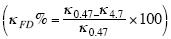
<body><![CDATA[<p align="justify"><font face="verdana" size="2">Magnetic susceptibility was measured with a magnetic susceptibility meter MS2, Bartington Instruments Ltd., linked to MS2B dual frequency sensor (0.47 and 4.7 KHz), with a precision of about 1 %. With this sensor, it is possible to measure specific susceptibility<img src="/img/revistas/geoint/v45n4/a1s2.jpg"> <sup></sup>and also low field &kappa; in two frequencies (&kappa;<sub>4.7</sub> and &kappa;<sub>0.47</sub>), so it was possible to estimate frequency&#150;dependent parameter (Dearing <i>et al., </i>1996; Mullins, 1973) <img src="/img/revistas/geoint/v45n4/a1s3.jpg">. Another interesting study to take into account is temperature dependence of k. This study was carried out with an adapted device for the susceptibilimeter, developed in our laboratory, i.e. a furnace to heat the samples (from room temperature to 700&deg;C), a thermometer and a thermal isolator to protect the MS2B sensor. The process was carried out in air. The heating rate was 10&deg;C min<sup>&#150;1</sup>.</font></p>     <p align="justify"><font face="verdana" size="2">Measurements of ARM and partial ARM (pARM) were carried out with an optional pARM device attached to an alternating field demagnetizer Molspin Ltd. and a spinner fluxgate magnetometer Minispin, Molspin Ltd. with a precision of about 5%. For both measurements the peak AF was 100 mT. ARM was determined superimposing a DC bias field of 90 &micro;T. In order to calculate the anhysteric susceptibility &kappa;<sub>ARM</sub>, DC field ranged between 10 and 90 &micro;T<i>. </i>The studies of pARM were done with a rate of decrease of 17 &micro;T per cycle and applying a DC field of 50 &micro;T over specific AF windows. A width of 5 mT for the window (it was moved into a range between 2.5 and 100 mT) was chosen, in order to find the coercivity spectrum.</font></p>     <p align="justify"><font face="verdana" size="2">IRM studies were conducted by using a pulse magnetizer model IM&#150;10&#150;30 ASC Scientific and the above mentioned magnetometer. Each sample was magnetized by exposing to growing stepwise DC fields with the magnetizer (from 10 mT to 4.5 T) and the remanent magnetisation, after each step, was measured using the magnetometer. After reaching IRM at a high field of 4.5 Tesla (IRM<sub>4</sub><sub>.5T</sub>), backfield was applied, in order to find the necessary field to eliminate the IRM<sub>4</sub><sub>.5T</sub>, coercivity of remanence (H<sub>CR</sub>). Another parameter, related to contribution of hard magnetic minerals (antiferromagnetic, e.g.: goethite, hematite) and soft magnetic minerals (ferrimagnetic, e.g.: magnetite), is S&#150;ratio, defined as IRM <sub>&#150;300mT</sub>/IRM<sub>2</sub><sub>.4T</sub>, where IRM <sub>&#150;300mT</sub> is the acquired IRM at a backfield of 300 mT.</font></p>     <p align="justify"><font face="verdana" size="2">After reaching ARM and IRM<sub>2</sub>.<sub>4T</sub> the samples were demagnetised using an AF demagnetiser Molspin Ltd. with the highest peak value of 102.5 mT. The median destructive fields (MDF) were also calculated for both remanences.</font></p>     <p align="justify"><font face="verdana" size="2">Thermal demagnetisation was carried out with the thermal specimen demagnetiser, model TD&#150;48 ASC Scientific. Samples were heated in growing stepwise temperatures in air, from room temperature up to 700&deg;C. After each step, remanent magnetisation and magnetic susceptibility were measured for cooled samples. Thermal demagnetisation and susceptibility curves were represented.</font></p>     <p align="justify"><font face="verdana" size="2">The identification of minerals by X&#150;ray diffraction was performed with a Philips PW 1027 diffractometer using Cu&#150;K&alpha; radiation, Ni filter and velocity of scanning &deg;2&theta;/minute.</font></p>     <p align="justify"><font face="verdana" size="2">&nbsp;</font></p>     <p align="justify"><font face="verdana" size="2"><b>RESULTS AND DISCUSSION</b></font></p>     <p align="justify"><font face="verdana" size="2">Magnetic susceptibility was measured twice and then averaged <a href="/img/revistas/geoint/v45n4/a1t1.jpg" target="_blank">(Table 1)</a>, the value of <img src="/img/revistas/geoint/v45n4/a1s4.jpg"> was 38.9 x10<sup>&#150;8</sup> m<sup>3</sup> kg<sup>&#150;1</sup>. Such value of magnetic susceptibility is within the range proposed by different authors (Thompson and Oldfield, 1986; Dekkers, 1989; Hunt <i>et al., </i>1995; Maher and Thompson, 1999), as can be observed in <a href="/img/revistas/geoint/v45n4/a1t1.jpg" target="_blank">Table 1</a>. On the other hand, frequency&#150;dependent magnetic susceptibility (&kappa;<sub>FD</sub>%) was 0%. This value rules out the presence of materials with superparamagnetic domains (SP).</font></p>     <p align="justify"><font face="verdana" size="2">The measurements of pARM showed low acquisition values (between 4.7 and 5.4 mA m<sup>&#150;1</sup>), and non&#150;significant relative variations of pARM (<img src="/img/revistas/geoint/v45n4/a1s1.jpg">15%). Therefore no definitive conclusions have been achieved. Generally these variations are related to magnetites of different grain size (Jackson <i>et al., </i>1988). Probably, the lack of conclusions in this case is due to the antiferromagnetic characteristics of the sample, in view of the fact that the spectrum of coercivities is different from those of soft magnetic materials (ferrimagnetic).</font></p>     ]]></body>
<body><![CDATA[<p align="justify"><font face="verdana" size="2"><a href="/img/revistas/geoint/v45n4/a1f2.jpg" target="_blank">Figure 2</a> shows the acquired ARM at several applied DC fields; the highest value of ARM was <img src="/img/revistas/geoint/v45n4/a1s1.jpg">33.9 mA m<sup>&#150;1 </sup>(19.4x10<sup>&#150;6</sup> A m<sup>2</sup> kg<sup>&#150;1</sup>). The response of the materials is almost lineal; the correlation factor of a lineal fitting is excellent (R<img src="/img/revistas/geoint/v45n4/a1s1.jpg">0.99). The slope of the straight line defines the &kappa;<sub>ARM</sub>and it is 27.1 x 10<sup>&#150;5</sup> SI (15.5 x10<sup>&#150;8</sup> m<sup>3</sup> kg<sup>&#150;1</sup>). The value of ARM (ARM<sub>90&micro;T</sub>) is of the same order of magnitude as those reported by other authors <a href="/img/revistas/geoint/v45n4/a1t1.jpg" target="_blank">(Table 1)</a>. In addition, two ratios between different parameters (ARM/IRM<sub>2.4T</sub>, ARM/<img src="/img/revistas/geoint/v45n4/a1s4.jpg">) are also within the range of characteristic values of natural goethite <a href="/img/revistas/geoint/v45n4/a1t1.jpg" target="_blank">(Table 1)</a>.</font></p>     <p align="justify"><font face="verdana" size="2">IRM acquisition and backfield measurements are shown in <a href="/img/revistas/geoint/v45n4/a1f3.jpg" target="_blank">Figure 3</a>. The natural remanent magnetisation (NRM) of the sample was <img src="/img/revistas/geoint/v45n4/a1s1.jpg">3.5x10<sup>&#150;6</sup> A m<sup>2</sup> kg<sup>&#150;1</sup>. High fields (<img src="/img/revistas/geoint/v45n4/a1s1.jpg">4.5 T) were not enough to reach the saturation IRM (SIRM), IRM<sub>4</sub><sub>.5T</sub>= 39.2 A m<sup>&#150;1</sup>. (22.2 mA m<sup>2</sup> kg<sup>&#150;1</sup>). Values of SIRM for natural goethite reported by other authors (<img src="/img/revistas/geoint/v45n4/a1s1.jpg">8 mA m<sup>2</sup> kg<sup>&#150;1</sup>, France and Oldfield, 2000, <img src="/img/revistas/geoint/v45n4/a1s1.jpg">50 mA m<sup>2</sup> kg<sup>&#150;1</sup>, Maher and Thompson, 1999) are of the same order of magnitude as those recorded in this work for IRM<sub>4.5T</sub> <a href="/img/revistas/geoint/v45n4/a1t1.jpg" target="_blank">(Table 1)</a>. After reaching IRM<sub>4.5T</sub>, backfield was applied and H<sub>CR</sub> was about 268 mT. High values of H<sub>CR</sub> are expected for this kind of mineral, and, effectively, H value determined for this sample is similar to characteristic values of hematite. The S&#150;ratio was calculated (<img src="/img/revistas/geoint/v45n4/a1s1.jpg">0.147). S&#150;ratio values close to 1 indicate predominance of ferrimagnetic materials among magnetic contributions. On the other hand, in this case, S&#150;ratio is closer to 0, which is consistent with the magnetic characteristics of the studied sample (antiferromagnetic). <a href="/img/revistas/geoint/v45n4/a1t1.jpg" target="_blank">Table 1</a> shows a very good agreement between different ratios <img src="/img/revistas/geoint/v45n4/a1s5.jpg"> and IRM<sub>4</sub><sub>.5T</sub>/<img src="/img/revistas/geoint/v45n4/a1s4.jpg">. According to the flow charts for discriminate different magnetic minerals (Figure 1.7 in Maher <i>et al., </i>1999), IRM acquisition measurements and the value of IRM<sub>4</sub><sub>.5T</sub>/<img src="/img/revistas/geoint/v45n4/a1s4.jpg"> lower than 200 kA m<sup>&#150;1</sup> allow confirm, in qualitative way, the presence of goethite.</font></p>     <p align="justify"><font face="verdana" size="2">Magnetic demagnetisation of the sample, after reaching ARM, was almost total (<img src="/img/revistas/geoint/v45n4/a1s1.jpg">15% of ARM, <a href="/img/revistas/geoint/v45n4/a1f4.jpg" target="_blank">Figure 4</a>); whereas a residual magnetisation, close to NRM value, could not be erased. The median destructive field MDF<sub>ARM</sub> was about 62.29 mT. High values of MDF<sub>ARM</sub> were found by AF demagnetisation, as well as a weak demagnetisation corresponding to a high IRM<sub>2</sub><sub>.4T</sub>. However, it is worth mentioning that ARM could not correspond to the saturation value, so MDF<sub>ARM</sub> parameter could be underestimated. <a href="/img/revistas/geoint/v45n4/a1f4.jpg" target="_blank">Figure 4</a> also shows that IRM<sub>2.4T</sub> demagnetisation was incomplete; IRM<sub>2</sub><sub>.4T</sub> was only reduced to <img src="/img/revistas/geoint/v45n4/a1s1.jpg">75%; for this reason MDF<sub>IRM </sub>could not be calculated. These results are expectable in this kind of material. It is necessary to apply very high AF in order to erase the IRM<sub>2</sub><sub>.4T</sub> (although it is not always possible) in this case an effective method is thermal demagnetisation (Dunlop and &Ouml;zdemir, 1997).</font></p>     <p align="justify"><font face="verdana" size="2">The temperature dependence of &kappa; is shown in <a href="/img/revistas/geoint/v45n4/a1f5.jpg" target="_blank">Figure 5</a>. The heating curve was carried out from room temperature to 150&deg;C, a pronounced peak (Hopkinson peak&#150;like increase) is observed at 85.7&deg;C followed by an important decrease (<img src="/img/revistas/geoint/v45n4/a1s1.jpg">60%) up to 106.6&deg;C. According to the discussion triggered by Petrovsky and Kapicka (2005) about the determination of the Curie (N&eacute;el) temperature from the temperature dependence of &kappa;, a critical temperature was estimated from the evidence of a Hopkinson peak just below T<sub>N</sub>, being <img src="/img/revistas/geoint/v45n4/a1s1.jpg">85.7&deg;C. The value of critical temperature T<sub>N</sub> is lower than those proposed by some authors (<img src="/img/revistas/geoint/v45n4/a1s1.jpg">120&deg;C), however, the lowest values can be related with intrinsic characteristics of goethite, such as crystallinity, excess water and grain size, the presence of small quantities of impurities or isomorphous substitution (&Ouml;zdemir and Dunlop, 1996; De Boer and Dekkers, 1998; Dearing, 1999; Maher <i>et al., </i>2004; Barrero <i>et al.</i>, 2006). Although the decrease of k at T<sub>N</sub> is significant, it is not enough to make it zero. Probably, other magnetic materials with higher critical temperatures are present in the sample. Such possibility was confirmed through thermal demagnetisation measurements.</font></p>     <p align="justify"><font face="verdana" size="2">Stepwise thermal demagnetisation of IRM and susceptibility curves are shown in <a href="/img/revistas/geoint/v45n4/a1f6.jpg" target="_blank">Figure 6</a>. Three phases are observed from the thermal demagnetisation curve and from its derived distribution (see bar plot in <a href="/img/revistas/geoint/v45n4/a1f6.jpg" target="_blank">Figure 6</a>). A small low temperature phase is removed between room temperature and 200&deg;C and it can be identified as goethite. The second small phase is removed between 230 and 400&deg;C and the third one shows the largest decay of the remanent magnetisation. At about the N&eacute;el temperature of hematite (T<sub>N</sub>= 675&deg;C), the remanent magnetisation is just entirely removed, showing the presence of hematite. Although intergrown hematite/goethite aggregates and newly formed hematite cannot be discriminated from this curve, it is possible to observe the neoformation of hematite through susceptibility curve.</font></p>     <p align="justify"><font face="verdana" size="2">The presence of goethite is also supported from the susceptibility curve <a href="/img/revistas/geoint/v45n4/a1f6.jpg" target="_blank">(Figure 6)</a>. Susceptibility measurements were conducted between steps in order to monitor changes in magnetic mineralogy, in particular, pronounced changes are observed between 250 and 400&deg;C. Such behaviour can be due to the dehydroxylation of goethite to hematite that takes place at 200&#150;400&deg;C (&Ouml;zdemir and Dunlop, 1996; Ruan <i>et al., </i>2001; Przepiera and Przepiera, 2003).</font></p>     <p align="justify"><font face="verdana" size="2">Although in Tharsis area the main mineral is pyrite (FeS<sub>2</sub>), its contribution to the magnetic parameters is not significant, on account of its paramagnetic nature. The presence of related iron sulphures, like pyrrhotite (<img src="/img/revistas/geoint/v45n4/a1s1.jpg">Fe<sub>7</sub>S<sub>8</sub>) and greigite (Fe<sub>3</sub>S<sub>4</sub>), common in this mine, is not observed in the studied sample, because the coercivity of remanence spectrum of these sulphures shows very much lower values than those calculated in this work (Sagnotti and Winkler, 1999). The magnetic susceptibility of pyrrhotite is also very much higher than those recorded in this study; moreover, this mineral and greigite were not detected from thermal studies. Although the presence of lepidocrocite is possible, the critical temperature of this mineral is &#150;196&deg;C, and at room temperature it has no remanent magnetisation (Thompson and Oldfield, 1986), then it does not contribute to the magnetic parameters. Finally, since magnetite is an iron oxide that occurs widely in most of environments, its presence should be discussed. This mineral is not inferred from room temperature magnetic measurements; moreover, any soft magnetic phase is not detected from stepwise thermal demagnetisation <a href="/img/revistas/geoint/v45n4/a1f6.jpg" target="_blank">(Figure 6)</a>.</font></p>     <p align="justify"><font face="verdana" size="2">The material was also analysed by supportive studies, i.e. SEM and DRX techniques. Goethite of Tharsis mine appears as pulverulent aggregates constituted by grains of irregular shape (Figure 7a), 10&#150;20 &micro;m size, and sometimes as needle&#150;like crystals, e.g. <img src="/img/revistas/geoint/v45n4/a1s1.jpg">3x22 &micro;m (Figure 7b), in general with a poor crystalline development. The X ray diffraction diagram (Figure 8) shows that the analysed sample presents a high content of goethite with minor amounts of hematite and quartz revealed by the size and definition of the XRD peaks.</font></p>     <p align="justify"><font face="verdana" size="2">&nbsp;</font></p>     <p align="justify"><font face="verdana" size="2"><b>CONCLUSIONS</b></font></p>     ]]></body>
<body><![CDATA[<p align="justify"><font face="verdana" size="2">The presence of goethite in the material under study is confirmed from the analysis of different magnetic studies. Furthermore, its characteristic magnetic parameters were determined, contributing to new data of this mineral and its occurrence in Tharsis area. Since remanence studies of goethites, especially IRM, requires high fields to reach the saturation, related parameters (e.g.: coercivity of remanence) could be underestimated.</font></p>     <p align="justify"><font face="verdana" size="2">Although goethite is the mineral under interest, the presence of hematite &#150; as intergrown goethite/hematite or neoformation after heating &#150; cannot be discarded from IRM and thermal studies. On the other hand, traces of soft mineral, such as magnetite were not observed. In addition, such magnetic conclusions are supported by SEM and XRD studies.</font></p>     <p align="justify"><font face="verdana" size="2">&nbsp;</font></p>     <p align="justify"><font face="verdana" size="2"><b>ACKNOWLEDGEMENTS</b></font></p>     <p align="justify"><font face="verdana" size="2">The authors thank Universidad Nacional del Centro de la Provincia de Buenos Aires (UNCPBA), Universidad Nacional de La Plata (UNLP), CONICET and CICPBA for their financial support. Many thanks to Ing. Eduardo Tavani (Cetmic&#150;CIC) for providing the material from Tharsis mine. The authors also thank to both anonymous reviewers for their useful suggestions in order to improve this manuscript.</font></p>     <p align="justify"><font face="verdana" size="2">&nbsp;</font></p>     <p align="justify"><font face="verdana" size="2"><b>BIBLIOGRAPHY</b></font></p>     <!-- ref --><p align="justify"><font face="verdana" size="2">BANERJEE, S.K., 1970. Origin of thermoremanence in goethite. <i>Earth Planet Sci. Lett. 8, </i>197&#150;201.</font>&nbsp;&nbsp;&nbsp;&nbsp;&nbsp;&nbsp;&nbsp;&nbsp;[&#160;<a href="javascript:void(0);" onclick="javascript: window.open('/scielo.php?script=sci_nlinks&ref=3913684&pid=S0016-7169200600040000100001&lng=','','width=640,height=500,resizable=yes,scrollbars=1,menubar=yes,');">Links</a>&#160;]<!-- end-ref --><!-- ref --><p align="justify"><font face="verdana" size="2">BARRERO, C. A., J. D. BETANCUR, J. M. GRENECHE and T. S. BERQU&Oacute;, 2006. Magnetism in non&#150;stoichiometric goethite of varying total water content and surface area. <i>Geophys. J. Int. 164 (2), </i>331&#150;339.</font>&nbsp;&nbsp;&nbsp;&nbsp;&nbsp;&nbsp;&nbsp;&nbsp;[&#160;<a href="javascript:void(0);" onclick="javascript: window.open('/scielo.php?script=sci_nlinks&ref=3913685&pid=S0016-7169200600040000100002&lng=','','width=640,height=500,resizable=yes,scrollbars=1,menubar=yes,');">Links</a>&#160;]<!-- end-ref --><!-- ref --><p align="justify"><font face="verdana" size="2">DE BOER, C. B. and M. J. DEKKERS, 1998. Thermomagnetic behaviour of hematite and goethite as a function of grain size in various non&#150;saturating magnetic fields. <i>Geophys. J. Int. 133, </i>541&#150;552.</font>&nbsp;&nbsp;&nbsp;&nbsp;&nbsp;&nbsp;&nbsp;&nbsp;[&#160;<a href="javascript:void(0);" onclick="javascript: window.open('/scielo.php?script=sci_nlinks&ref=3913686&pid=S0016-7169200600040000100003&lng=','','width=640,height=500,resizable=yes,scrollbars=1,menubar=yes,');">Links</a>&#160;]<!-- end-ref --><!-- ref --><p align="justify"><font face="verdana" size="2">DIXON, C., 1979. Atlas of Economic Mineral Deposits. Edited by Chapman and Hall Ltd., 68&#150;69.</font>&nbsp;&nbsp;&nbsp;&nbsp;&nbsp;&nbsp;&nbsp;&nbsp;[&#160;<a href="javascript:void(0);" onclick="javascript: window.open('/scielo.php?script=sci_nlinks&ref=3913687&pid=S0016-7169200600040000100004&lng=','','width=640,height=500,resizable=yes,scrollbars=1,menubar=yes,');">Links</a>&#160;]<!-- end-ref --><!-- ref --><p align="justify"><font face="verdana" size="2">DEARING, J., R. DANN, K. HAY, J. LEES, P. LOVELAND, B. MAHER and K. O'GRADY, 1996. Frequency&#150;dependent susceptibility measurements of environmental materials. <i>Geophys. J. Int. 124, </i>228&#150;240.</font>&nbsp;&nbsp;&nbsp;&nbsp;&nbsp;&nbsp;&nbsp;&nbsp;[&#160;<a href="javascript:void(0);" onclick="javascript: window.open('/scielo.php?script=sci_nlinks&ref=3913688&pid=S0016-7169200600040000100005&lng=','','width=640,height=500,resizable=yes,scrollbars=1,menubar=yes,');">Links</a>&#160;]<!-- end-ref --><!-- ref --><p align="justify"><font face="verdana" size="2">DEARING, J., 1999. Operation manual, Bartington Instruments Ltd. Environmental magnetic susceptibility &#150; Using the Bartington MS2 system. Chi Publishing, UK, 54 pp.</font>&nbsp;&nbsp;&nbsp;&nbsp;&nbsp;&nbsp;&nbsp;&nbsp;[&#160;<a href="javascript:void(0);" onclick="javascript: window.open('/scielo.php?script=sci_nlinks&ref=3913689&pid=S0016-7169200600040000100006&lng=','','width=640,height=500,resizable=yes,scrollbars=1,menubar=yes,');">Links</a>&#160;]<!-- end-ref --><!-- ref --><p align="justify"><font face="verdana" size="2">DEKKERS, M. J., 1989. Magnetic properties of natural goethite &#150; I. Grain size dependence of some low&#150; and high&#150;field related rock magnetic parameters measured at room temperature. <i>Geophys. J., 97, </i>341&#150;355.</font>&nbsp;&nbsp;&nbsp;&nbsp;&nbsp;&nbsp;&nbsp;&nbsp;[&#160;<a href="javascript:void(0);" onclick="javascript: window.open('/scielo.php?script=sci_nlinks&ref=3913690&pid=S0016-7169200600040000100007&lng=','','width=640,height=500,resizable=yes,scrollbars=1,menubar=yes,');">Links</a>&#160;]<!-- end-ref --><!-- ref --><p align="justify"><font face="verdana" size="2">DUNLOP, J. and &Ouml;. &Ouml;ZDEMIR, 1997. Rock magnetism. Fundamentals and frontiers. Cambridge University Press. 573 pp.</font>&nbsp;&nbsp;&nbsp;&nbsp;&nbsp;&nbsp;&nbsp;&nbsp;[&#160;<a href="javascript:void(0);" onclick="javascript: window.open('/scielo.php?script=sci_nlinks&ref=3913691&pid=S0016-7169200600040000100008&lng=','','width=640,height=500,resizable=yes,scrollbars=1,menubar=yes,');">Links</a>&#160;]<!-- end-ref --><!-- ref --><p align="justify"><font face="verdana" size="2">EVANS, M. E. and F. HELLER, 1994. Magnetic enhancement and palaeoclimate: Study of a loess/ palaeosol couplet across the Loess Plateau of China. <i>Geophys. J. Int., 117, </i>257&#150;264.</font>&nbsp;&nbsp;&nbsp;&nbsp;&nbsp;&nbsp;&nbsp;&nbsp;[&#160;<a href="javascript:void(0);" onclick="javascript: window.open('/scielo.php?script=sci_nlinks&ref=3913692&pid=S0016-7169200600040000100009&lng=','','width=640,height=500,resizable=yes,scrollbars=1,menubar=yes,');">Links</a>&#160;]<!-- end-ref --><!-- ref --><p align="justify"><font face="verdana" size="2">FASSBINDER, J. W. E., H. STANJEK and H. VALI, 1990. Occurrence of magnetic bacteria in soil. <i>Nature, 343, </i>161&#150;163.</font>&nbsp;&nbsp;&nbsp;&nbsp;&nbsp;&nbsp;&nbsp;&nbsp;[&#160;<a href="javascript:void(0);" onclick="javascript: window.open('/scielo.php?script=sci_nlinks&ref=3913693&pid=S0016-7169200600040000100010&lng=','','width=640,height=500,resizable=yes,scrollbars=1,menubar=yes,');">Links</a>&#160;]<!-- end-ref --><!-- ref --><p align="justify"><font face="verdana" size="2">FINE, P., K. L. VEROSUB and M. J. SINGER, 1995. Pedogenic and lithogenic contributions to the magnetic susceptibility record of the Chinese loess/palaeosol sequence. <i>Geophys. J. Int., 122, </i>97&#150;107.</font>&nbsp;&nbsp;&nbsp;&nbsp;&nbsp;&nbsp;&nbsp;&nbsp;[&#160;<a href="javascript:void(0);" onclick="javascript: window.open('/scielo.php?script=sci_nlinks&ref=3913694&pid=S0016-7169200600040000100011&lng=','','width=640,height=500,resizable=yes,scrollbars=1,menubar=yes,');">Links</a>&#160;]<!-- end-ref --><!-- ref --><p align="justify"><font face="verdana" size="2">FRANCE, D. E. and F. OLDFIELD, 2000. Identifying goethite and hematite from rock magnetic measurements of soils and sediments. <i>J. Geophys. Res. 105, </i>2781&#150;2795.</font>&nbsp;&nbsp;&nbsp;&nbsp;&nbsp;&nbsp;&nbsp;&nbsp;[&#160;<a href="javascript:void(0);" onclick="javascript: window.open('/scielo.php?script=sci_nlinks&ref=3913695&pid=S0016-7169200600040000100012&lng=','','width=640,height=500,resizable=yes,scrollbars=1,menubar=yes,');">Links</a>&#160;]<!-- end-ref --><!-- ref --><p align="justify"><font face="verdana" size="2">HANESCH, M., H. STANJEK and N. PETERSEN, 2006. Thermomagnetic measurements of soil iron minerals: the role of organic carbon. <i>Geophys. J. Int., 165, 53&#150;61.</i></font>&nbsp;&nbsp;&nbsp;&nbsp;&nbsp;&nbsp;&nbsp;&nbsp;[&#160;<a href="javascript:void(0);" onclick="javascript: window.open('/scielo.php?script=sci_nlinks&ref=3913696&pid=S0016-7169200600040000100013&lng=','','width=640,height=500,resizable=yes,scrollbars=1,menubar=yes,');">Links</a>&#160;]<!-- end-ref --><!-- ref --><p align="justify"><font face="verdana" size="2">HEDLEY, I. G., 1971. The weak ferromagnetism of goethite (&#150;FeOOH). Z. <i>Geophys., 37, </i>409&#150;420.</font>&nbsp;&nbsp;&nbsp;&nbsp;&nbsp;&nbsp;&nbsp;&nbsp;[&#160;<a href="javascript:void(0);" onclick="javascript: window.open('/scielo.php?script=sci_nlinks&ref=3913697&pid=S0016-7169200600040000100014&lng=','','width=640,height=500,resizable=yes,scrollbars=1,menubar=yes,');">Links</a>&#160;]<!-- end-ref --><!-- ref --><p align="justify"><font face="verdana" size="2">HUNT, C. P., B. M. MOSKOWITZ and S. K. BANERJEE, 1995. Magnetic properties of rocks and minerals. <i>In: </i>Rock Physics and Phase Relations: A Handbook of Physical Constants, 3, Ahrens, T. J., 189&#150;204. American Geophysical Union, Washington, DC.</font>&nbsp;&nbsp;&nbsp;&nbsp;&nbsp;&nbsp;&nbsp;&nbsp;[&#160;<a href="javascript:void(0);" onclick="javascript: window.open('/scielo.php?script=sci_nlinks&ref=3913698&pid=S0016-7169200600040000100015&lng=','','width=640,height=500,resizable=yes,scrollbars=1,menubar=yes,');">Links</a>&#160;]<!-- end-ref --><!-- ref --><p align="justify"><font face="verdana" size="2">JACKSON, M., W. GRUBER, J. MARVIN and S. K. BANERJEE, 1988. Partial anhysteric remanence and its anisotropies: applications and grainsize&#150;dependence. <i>Geophys. Res. Lett., 15, </i>440&#150;443.</font>&nbsp;&nbsp;&nbsp;&nbsp;&nbsp;&nbsp;&nbsp;&nbsp;[&#160;<a href="javascript:void(0);" onclick="javascript: window.open('/scielo.php?script=sci_nlinks&ref=3913699&pid=S0016-7169200600040000100016&lng=','','width=640,height=500,resizable=yes,scrollbars=1,menubar=yes,');">Links</a>&#160;]<!-- end-ref --><!-- ref --><p align="justify"><font face="verdana" size="2">KRUIVER, P. P., M. J. DEKKERS and D. HESLOP, 2001. Quantification of magnetic coercivity components by the analysis of acquisition curves of isothermal remanent magnetisation. <i>Earth Planet. Sci. Lett., 189, </i>269&#150;276.</font>&nbsp;&nbsp;&nbsp;&nbsp;&nbsp;&nbsp;&nbsp;&nbsp;[&#160;<a href="javascript:void(0);" onclick="javascript: window.open('/scielo.php?script=sci_nlinks&ref=3913700&pid=S0016-7169200600040000100017&lng=','','width=640,height=500,resizable=yes,scrollbars=1,menubar=yes,');">Links</a>&#160;]<!-- end-ref --><!-- ref --><p align="justify"><font face="verdana" size="2">LIU, X&#150;M., J. SHAW, T&#150;S. LIU, F. HELLER and M&#150;Y. CHENG, 1993. Rock magnetic properties and palaeoclimate of Chinese loess. <i>J. Geomag. Geoelec., 45, </i>117&#150;124.</font>&nbsp;&nbsp;&nbsp;&nbsp;&nbsp;&nbsp;&nbsp;&nbsp;[&#160;<a href="javascript:void(0);" onclick="javascript: window.open('/scielo.php?script=sci_nlinks&ref=3913701&pid=S0016-7169200600040000100018&lng=','','width=640,height=500,resizable=yes,scrollbars=1,menubar=yes,');">Links</a>&#160;]<!-- end-ref --><!-- ref --><p align="justify"><font face="verdana" size="2">MAHER, B.A., 1986. Characterisation of soil by mineral magnetic measurements. <i>Phys. Earth Planet. Int., 42, </i>76&#150;92.</font>&nbsp;&nbsp;&nbsp;&nbsp;&nbsp;&nbsp;&nbsp;&nbsp;[&#160;<a href="javascript:void(0);" onclick="javascript: window.open('/scielo.php?script=sci_nlinks&ref=3913702&pid=S0016-7169200600040000100019&lng=','','width=640,height=500,resizable=yes,scrollbars=1,menubar=yes,');">Links</a>&#160;]<!-- end-ref --><!-- ref --><p align="justify"><font face="verdana" size="2">MAHER, B. A. and R. THOMPSON, 1999. Quaternary climates, environments and magnetism. Cambridge University Press. 390 pp.</font>&nbsp;&nbsp;&nbsp;&nbsp;&nbsp;&nbsp;&nbsp;&nbsp;[&#160;<a href="javascript:void(0);" onclick="javascript: window.open('/scielo.php?script=sci_nlinks&ref=3913703&pid=S0016-7169200600040000100020&lng=','','width=640,height=500,resizable=yes,scrollbars=1,menubar=yes,');">Links</a>&#160;]<!-- end-ref --><!-- ref --><p align="justify"><font face="verdana" size="2">MAHER, B. A., V. V. KARLOUKOVSKI and T. J. MUTCH, 2004. High&#150;field remanence properties of synthetic and natural submicrometre haematites and goethites: significance for environmental contexts. <i>Earth Planet. Sci. Lett., 226, 491&#150; </i>505.</font>&nbsp;&nbsp;&nbsp;&nbsp;&nbsp;&nbsp;&nbsp;&nbsp;[&#160;<a href="javascript:void(0);" onclick="javascript: window.open('/scielo.php?script=sci_nlinks&ref=3913704&pid=S0016-7169200600040000100021&lng=','','width=640,height=500,resizable=yes,scrollbars=1,menubar=yes,');">Links</a>&#160;]<!-- end-ref --><!-- ref --><p align="justify"><font face="verdana" size="2">MULLINS, C. E., 1973. Magnetic viscosity, quadrature susceptibility, and frequency dependence of susceptibility in single&#150;domain assemblies of magnetite and maghemite. <i>J. Geophys. Res., 78 (5), </i>804&#150;809.</font>&nbsp;&nbsp;&nbsp;&nbsp;&nbsp;&nbsp;&nbsp;&nbsp;[&#160;<a href="javascript:void(0);" onclick="javascript: window.open('/scielo.php?script=sci_nlinks&ref=3913705&pid=S0016-7169200600040000100022&lng=','','width=640,height=500,resizable=yes,scrollbars=1,menubar=yes,');">Links</a>&#160;]<!-- end-ref --><!-- ref --><p align="justify"><font face="verdana" size="2">MULLINS, C. E., 1977. Magnetic susceptibility of the soil and its significance in Soil Science: a review. <i>J. Soil Sci., 28, </i>223&#150;246.</font>&nbsp;&nbsp;&nbsp;&nbsp;&nbsp;&nbsp;&nbsp;&nbsp;[&#160;<a href="javascript:void(0);" onclick="javascript: window.open('/scielo.php?script=sci_nlinks&ref=3913706&pid=S0016-7169200600040000100023&lng=','','width=640,height=500,resizable=yes,scrollbars=1,menubar=yes,');">Links</a>&#160;]<!-- end-ref --><!-- ref --><p align="justify"><font face="verdana" size="2">&Ouml;ZDEMIR, &Ouml;. and D. J. DUNLOP, 1996. Thermoremanence and N&eacute;el temperature of goethite. <i>Geophys. Res. Lett. 23, </i>921&#150;924.</font>&nbsp;&nbsp;&nbsp;&nbsp;&nbsp;&nbsp;&nbsp;&nbsp;[&#160;<a href="javascript:void(0);" onclick="javascript: window.open('/scielo.php?script=sci_nlinks&ref=3913707&pid=S0016-7169200600040000100024&lng=','','width=640,height=500,resizable=yes,scrollbars=1,menubar=yes,');">Links</a>&#160;]<!-- end-ref --><!-- ref --><p align="justify"><font face="verdana" size="2">PETROVSKY, E. and A. KAPICKA, 2005. Coments on "The use of field dependence of magnetic susceptibility for monitoring variations in titanomagnetites composition &#150; a case study on basanites from the Vogelsberg 1996 drillhole, Germany" by de Wall and Nano, <i>Stud. Geophys. Geod., 48, 767&#150;776. Stud. Geophys. Geod., 49, </i>255&#150;258.</font>&nbsp;&nbsp;&nbsp;&nbsp;&nbsp;&nbsp;&nbsp;&nbsp;[&#160;<a href="javascript:void(0);" onclick="javascript: window.open('/scielo.php?script=sci_nlinks&ref=3913708&pid=S0016-7169200600040000100025&lng=','','width=640,height=500,resizable=yes,scrollbars=1,menubar=yes,');">Links</a>&#160;]<!-- end-ref --><!-- ref --><p align="justify"><font face="verdana" size="2">PRZEPIERA, K. and A. PRZEPIERA, 2003. Thermal transformations of selected transition metals oxyhydroxides. <i>J. Therm. Anal. Cal., 74, </i>659&#150;666.</font>&nbsp;&nbsp;&nbsp;&nbsp;&nbsp;&nbsp;&nbsp;&nbsp;[&#160;<a href="javascript:void(0);" onclick="javascript: window.open('/scielo.php?script=sci_nlinks&ref=3913709&pid=S0016-7169200600040000100026&lng=','','width=640,height=500,resizable=yes,scrollbars=1,menubar=yes,');">Links</a>&#160;]<!-- end-ref --><!-- ref --><p align="justify"><font face="verdana" size="2">ROCHETTE, P. and G. FILLION, 1989. Field and temperature behaviour of remanence in synthetic goethite: paleomagnetic implications. <i>Geophys. Res. Lett., 16 (8), </i>851&#150;854.</font>&nbsp;&nbsp;&nbsp;&nbsp;&nbsp;&nbsp;&nbsp;&nbsp;[&#160;<a href="javascript:void(0);" onclick="javascript: window.open('/scielo.php?script=sci_nlinks&ref=3913710&pid=S0016-7169200600040000100027&lng=','','width=640,height=500,resizable=yes,scrollbars=1,menubar=yes,');">Links</a>&#160;]<!-- end-ref --><!-- ref --><p align="justify"><font face="verdana" size="2">ROCHETTE P., L. ESTEBAN, H. RAKOTO, J&#150;L., BOUCHEZ, Q. LIU and J. TORRENT, 2005. Non&#150;saturation of the defect moment of goethite and finegrained hematite up to 57 Tesla. <i>Geophys. Res. Lett., 32, </i>L22309, doi: 10.1029/2005GL024196.</font>&nbsp;&nbsp;&nbsp;&nbsp;&nbsp;&nbsp;&nbsp;&nbsp;[&#160;<a href="javascript:void(0);" onclick="javascript: window.open('/scielo.php?script=sci_nlinks&ref=3913711&pid=S0016-7169200600040000100028&lng=','','width=640,height=500,resizable=yes,scrollbars=1,menubar=yes,');">Links</a>&#160;]<!-- end-ref --><!-- ref --><p align="justify"><font face="verdana" size="2">RUAN, H. D., R. L. FROST and J. T. KLOPROGGE, 2001. The behavior of hydroxyl units of synthetic goethite and its dehydroxylated product hematite. <i>Spectrochim. Acta, A, 57, </i>2575&#150;2586.</font>&nbsp;&nbsp;&nbsp;&nbsp;&nbsp;&nbsp;&nbsp;&nbsp;[&#160;<a href="javascript:void(0);" onclick="javascript: window.open('/scielo.php?script=sci_nlinks&ref=3913712&pid=S0016-7169200600040000100029&lng=','','width=640,height=500,resizable=yes,scrollbars=1,menubar=yes,');">Links</a>&#160;]<!-- end-ref --><!-- ref --><p align="justify"><font face="verdana" size="2">SAGNOTTI, L. and A. WINKLER, 1999. Rock magnetism and paleomagnetism of greigite&#150;bearing mudstones in the Italian peninsula. <i>Earth Planet. Sci. Lett., 165, </i>67&#150;80.</font>&nbsp;&nbsp;&nbsp;&nbsp;&nbsp;&nbsp;&nbsp;&nbsp;[&#160;<a href="javascript:void(0);" onclick="javascript: window.open('/scielo.php?script=sci_nlinks&ref=3913713&pid=S0016-7169200600040000100030&lng=','','width=640,height=500,resizable=yes,scrollbars=1,menubar=yes,');">Links</a>&#160;]<!-- end-ref --><!-- ref --><p align="justify"><font face="verdana" size="2">SOLOMON, M., F. TORNOS and O. C. GASPAR, 2002. Explanation for many of the unusual features of the massive sulphide deposits of the Iberian pyrite belt. <i>Geology, 30 (1), </i>87&#150;90.</font>&nbsp;&nbsp;&nbsp;&nbsp;&nbsp;&nbsp;&nbsp;&nbsp;[&#160;<a href="javascript:void(0);" onclick="javascript: window.open('/scielo.php?script=sci_nlinks&ref=3913714&pid=S0016-7169200600040000100031&lng=','','width=640,height=500,resizable=yes,scrollbars=1,menubar=yes,');">Links</a>&#160;]<!-- end-ref --><!-- ref --><p align="justify"><font face="verdana" size="2">SANGODE, S. J., J. BLOEMENDAL, R. KUMAR and S. K. GHOSH, 2001. Plio&#150;Pleistocene pedogenic changes in the Siwalik palaeosols: A rock magnetic approach. <i>Current Science, 81 (4), </i>387&#150;392.</font>&nbsp;&nbsp;&nbsp;&nbsp;&nbsp;&nbsp;&nbsp;&nbsp;[&#160;<a href="javascript:void(0);" onclick="javascript: window.open('/scielo.php?script=sci_nlinks&ref=3913715&pid=S0016-7169200600040000100032&lng=','','width=640,height=500,resizable=yes,scrollbars=1,menubar=yes,');">Links</a>&#160;]<!-- end-ref --><!-- ref --><p align="justify"><font face="verdana" size="2">SANGODE, S. J. and J. BLOEMENDAL, 2004. Pedogenic transformation of magnetic minerals in Pliocene&#150;Pleistocene palaeosols of the Siwalik Group, NW Himalaya, India. <i>Palaeo geography, Palaeoclimatology, Palaeoecology, 212, </i>95&#150;118.</font>&nbsp;&nbsp;&nbsp;&nbsp;&nbsp;&nbsp;&nbsp;&nbsp;[&#160;<a href="javascript:void(0);" onclick="javascript: window.open('/scielo.php?script=sci_nlinks&ref=3913716&pid=S0016-7169200600040000100033&lng=','','width=640,height=500,resizable=yes,scrollbars=1,menubar=yes,');">Links</a>&#160;]<!-- end-ref --><!-- ref --><p align="justify"><font face="verdana" size="2">SCHWERTMANN, U., 1971. Transformation of hematite to goethite in soils. <i>Nature, 232, </i>624&#150;625.</font>&nbsp;&nbsp;&nbsp;&nbsp;&nbsp;&nbsp;&nbsp;&nbsp;[&#160;<a href="javascript:void(0);" onclick="javascript: window.open('/scielo.php?script=sci_nlinks&ref=3913717&pid=S0016-7169200600040000100034&lng=','','width=640,height=500,resizable=yes,scrollbars=1,menubar=yes,');">Links</a>&#160;]<!-- end-ref --><!-- ref --><p align="justify"><font face="verdana" size="2">SCHWERTMANN, U., 1988. Occurrence and formation of iron oxides in various pedoenvironments. <i>In: </i>Iron in Soils and Clay Minerals, ed. Stucki, J.W. <i>et al., </i>pp. 267&#150;308. D. Reidel, Norwell, MA.</font>&nbsp;&nbsp;&nbsp;&nbsp;&nbsp;&nbsp;&nbsp;&nbsp;[&#160;<a href="javascript:void(0);" onclick="javascript: window.open('/scielo.php?script=sci_nlinks&ref=3913718&pid=S0016-7169200600040000100035&lng=','','width=640,height=500,resizable=yes,scrollbars=1,menubar=yes,');">Links</a>&#160;]<!-- end-ref --><!-- ref --><p align="justify"><font face="verdana" size="2">STOCKHAUSEN, H., 1998. Some new aspects for the modelling of isothermal remanent magnetization acquisition curves by cumulative log Gaussian functions. <i>Geophys. Res. Lett., 25 (12), </i>2217&#150;2220.</font>&nbsp;&nbsp;&nbsp;&nbsp;&nbsp;&nbsp;&nbsp;&nbsp;[&#160;<a href="javascript:void(0);" onclick="javascript: window.open('/scielo.php?script=sci_nlinks&ref=3913719&pid=S0016-7169200600040000100036&lng=','','width=640,height=500,resizable=yes,scrollbars=1,menubar=yes,');">Links</a>&#160;]<!-- end-ref --><!-- ref --><p align="justify"><font face="verdana" size="2">STRAUSS, G. K. and J. MADEL, 1970. Geology of the Massive Sulphide Deposits in the Spanish &#150; Portuguese pyrite Belt. <i>Geology, </i>63,191&#150;211.</font>&nbsp;&nbsp;&nbsp;&nbsp;&nbsp;&nbsp;&nbsp;&nbsp;[&#160;<a href="javascript:void(0);" onclick="javascript: window.open('/scielo.php?script=sci_nlinks&ref=3913720&pid=S0016-7169200600040000100037&lng=','','width=640,height=500,resizable=yes,scrollbars=1,menubar=yes,');">Links</a>&#160;]<!-- end-ref --><!-- ref --><p align="justify"><font face="verdana" size="2">TARLING, D. and F. HROUDA, 1993. The magnetic anisotropy of rocks. Chapman and Hall. 217 pp.</font>&nbsp;&nbsp;&nbsp;&nbsp;&nbsp;&nbsp;&nbsp;&nbsp;[&#160;<a href="javascript:void(0);" onclick="javascript: window.open('/scielo.php?script=sci_nlinks&ref=3913721&pid=S0016-7169200600040000100038&lng=','','width=640,height=500,resizable=yes,scrollbars=1,menubar=yes,');">Links</a>&#160;]<!-- end-ref --><!-- ref --><p align="justify"><font face="verdana" size="2">TAYLOR, R. M., B. A. MAHER and P. G. SELF, 1987. Magnetite in soils: I. The synthesis of single&#150;domain and superparamagnetic magnetite. <i>Clay Minerals, 22, </i>411&#150;422.</font>&nbsp;&nbsp;&nbsp;&nbsp;&nbsp;&nbsp;&nbsp;&nbsp;[&#160;<a href="javascript:void(0);" onclick="javascript: window.open('/scielo.php?script=sci_nlinks&ref=3913722&pid=S0016-7169200600040000100039&lng=','','width=640,height=500,resizable=yes,scrollbars=1,menubar=yes,');">Links</a>&#160;]<!-- end-ref --><!-- ref --><p align="justify"><font face="verdana" size="2">THOMPSON, R. and F. OLDFIELD, 1986. Environmental magnetism. Allen and Unwin (Publishers) Ltd. 225 pp.</font>&nbsp;&nbsp;&nbsp;&nbsp;&nbsp;&nbsp;&nbsp;&nbsp;[&#160;<a href="javascript:void(0);" onclick="javascript: window.open('/scielo.php?script=sci_nlinks&ref=3913723&pid=S0016-7169200600040000100040&lng=','','width=640,height=500,resizable=yes,scrollbars=1,menubar=yes,');">Links</a>&#160;]<!-- end-ref --><!-- ref --><p align="justify"><font face="verdana" size="2">WALDEN, J., F. OLDFIELD and J. P. SMITH, (Eds) 1999. Environmental magnetism: a practical guide. Technical Guide, No. 6. Quaternary Research Association, London.</font>&nbsp;&nbsp;&nbsp;&nbsp;&nbsp;&nbsp;&nbsp;&nbsp;[&#160;<a href="javascript:void(0);" onclick="javascript: window.open('/scielo.php?script=sci_nlinks&ref=3913724&pid=S0016-7169200600040000100041&lng=','','width=640,height=500,resizable=yes,scrollbars=1,menubar=yes,');">Links</a>&#160;]<!-- end-ref --><!-- ref --><p align="justify"><font face="verdana" size="2">WILLIAMS, E., 1933. The geology of the R&iacute;o Tinto mines. <i>Transactions Institute Mining Metallurgy, 43, </i>593&#150;640.</font>&nbsp;&nbsp;&nbsp;&nbsp;&nbsp;&nbsp;&nbsp;&nbsp;[&#160;<a href="javascript:void(0);" onclick="javascript: window.open('/scielo.php?script=sci_nlinks&ref=3913725&pid=S0016-7169200600040000100042&lng=','','width=640,height=500,resizable=yes,scrollbars=1,menubar=yes,');">Links</a>&#160;]<!-- end-ref --><!-- ref --><p align="justify"><font face="verdana" size="2">WILLAMS, D., R. I. STATON and F. RAMBAAUD, 1975. The Planes&#150;San Antonio pyretic deposit of Rio Tinto, Spain, its nature, environments and genesis. Transactions Institute Mining Metallurgy, 84, B73&#150;B82.</font>&nbsp;&nbsp;&nbsp;&nbsp;&nbsp;&nbsp;&nbsp;&nbsp;[&#160;<a href="javascript:void(0);" onclick="javascript: window.open('/scielo.php?script=sci_nlinks&ref=3913726&pid=S0016-7169200600040000100043&lng=','','width=640,height=500,resizable=yes,scrollbars=1,menubar=yes,');">Links</a>&#160;]<!-- end-ref --> ]]></body><back>
<ref-list>
<ref id="B1">
<nlm-citation citation-type="journal">
<person-group person-group-type="author">
<name>
<surname><![CDATA[BANERJEE]]></surname>
<given-names><![CDATA[S.K]]></given-names>
</name>
</person-group>
<source><![CDATA[Sci. Lett]]></source>
<year>1970</year>
<numero>8</numero>
<issue>8</issue>
<page-range>197-201</page-range></nlm-citation>
</ref>
<ref id="B2">
<nlm-citation citation-type="journal">
<person-group person-group-type="author">
<name>
<surname><![CDATA[BARRERO]]></surname>
<given-names><![CDATA[C. A]]></given-names>
</name>
<name>
<surname><![CDATA[BETANCUR]]></surname>
<given-names><![CDATA[J. D]]></given-names>
</name>
<name>
<surname><![CDATA[GRENECHE]]></surname>
<given-names><![CDATA[J. M]]></given-names>
</name>
<name>
<surname><![CDATA[BERQUÓ]]></surname>
<given-names><![CDATA[T. S]]></given-names>
</name>
</person-group>
<article-title xml:lang="en"><![CDATA[Magnetism in non-stoichiometric goethite of varying total water content and surface area]]></article-title>
<source><![CDATA[Geophys. J. Int]]></source>
<year>2006</year>
<volume>164</volume>
<numero>2</numero>
<issue>2</issue>
<page-range>331-339</page-range></nlm-citation>
</ref>
<ref id="B3">
<nlm-citation citation-type="journal">
<person-group person-group-type="author">
<name>
<surname><![CDATA[DE BOER]]></surname>
<given-names><![CDATA[C. B]]></given-names>
</name>
<name>
<surname><![CDATA[DEKKERS]]></surname>
<given-names><![CDATA[M. J]]></given-names>
</name>
</person-group>
<article-title xml:lang="en"><![CDATA[Thermomagnetic behaviour of hematite and goethite as a function of grain size in various non-saturating magnetic fields]]></article-title>
<source><![CDATA[Geophys. J. Int]]></source>
<year>1998</year>
<numero>133</numero>
<issue>133</issue>
<page-range>541-552</page-range></nlm-citation>
</ref>
<ref id="B4">
<nlm-citation citation-type="book">
<person-group person-group-type="author">
<name>
<surname><![CDATA[DIXON]]></surname>
<given-names><![CDATA[C]]></given-names>
</name>
</person-group>
<source><![CDATA[Atlas of Economic Mineral Deposits]]></source>
<year>1979</year>
<page-range>68-69</page-range><publisher-name><![CDATA[Chapman and Hall Ltd.]]></publisher-name>
</nlm-citation>
</ref>
<ref id="B5">
<nlm-citation citation-type="journal">
<person-group person-group-type="author">
<name>
<surname><![CDATA[DEARING]]></surname>
<given-names><![CDATA[J]]></given-names>
</name>
<name>
<surname><![CDATA[DANN]]></surname>
<given-names><![CDATA[R]]></given-names>
</name>
<name>
<surname><![CDATA[HAY]]></surname>
<given-names><![CDATA[K]]></given-names>
</name>
<name>
<surname><![CDATA[LEES]]></surname>
<given-names><![CDATA[J]]></given-names>
</name>
<name>
<surname><![CDATA[LOVELAND]]></surname>
<given-names><![CDATA[P]]></given-names>
</name>
<name>
<surname><![CDATA[MAHER]]></surname>
<given-names><![CDATA[B]]></given-names>
</name>
<name>
<surname><![CDATA[O'GRADY]]></surname>
<given-names><![CDATA[K]]></given-names>
</name>
</person-group>
<source><![CDATA[Geophys. J. Int]]></source>
<year>1996</year>
<numero>124</numero>
<issue>124</issue>
<page-range>228-240</page-range></nlm-citation>
</ref>
<ref id="B6">
<nlm-citation citation-type="book">
<person-group person-group-type="author">
<name>
<surname><![CDATA[DEARING]]></surname>
<given-names><![CDATA[J]]></given-names>
</name>
</person-group>
<source><![CDATA[Operation manual, Bartington Instruments Ltd. Environmental magnetic susceptibility - Using the Bartington MS2 system]]></source>
<year>1999</year>
<page-range>54</page-range><publisher-loc><![CDATA[^eUK UK]]></publisher-loc>
<publisher-name><![CDATA[Chi Publishing]]></publisher-name>
</nlm-citation>
</ref>
<ref id="B7">
<nlm-citation citation-type="journal">
<person-group person-group-type="author">
<name>
<surname><![CDATA[DEKKERS]]></surname>
<given-names><![CDATA[M. J]]></given-names>
</name>
</person-group>
<article-title xml:lang="en"><![CDATA[Magnetic properties of natural goethite - I. Grain size dependence of some low- and high-field related rock magnetic parameters measured at room temperature]]></article-title>
<source><![CDATA[Geophys. J]]></source>
<year>1989</year>
<numero>97</numero>
<issue>97</issue>
<page-range>341-355</page-range></nlm-citation>
</ref>
<ref id="B8">
<nlm-citation citation-type="book">
<person-group person-group-type="author">
<name>
<surname><![CDATA[DUNLOP]]></surname>
<given-names><![CDATA[J]]></given-names>
</name>
<name>
<surname><![CDATA[ÖZDEMIR]]></surname>
<given-names><![CDATA[Ö]]></given-names>
</name>
</person-group>
<source><![CDATA[Rock magnetism: Fundamentals and frontiers]]></source>
<year>1997</year>
<page-range>573</page-range><publisher-name><![CDATA[Cambridge University Press]]></publisher-name>
</nlm-citation>
</ref>
<ref id="B9">
<nlm-citation citation-type="journal">
<person-group person-group-type="author">
<name>
<surname><![CDATA[EVANS]]></surname>
<given-names><![CDATA[M. E]]></given-names>
</name>
<name>
<surname><![CDATA[HELLER]]></surname>
<given-names><![CDATA[F]]></given-names>
</name>
</person-group>
<article-title xml:lang="en"><![CDATA[Magnetic enhancement and palaeoclimate: Study of a loess/ palaeosol couplet across the Loess Plateau of China]]></article-title>
<source><![CDATA[Geophys. J. Int]]></source>
<year>1994</year>
<numero>117</numero>
<issue>117</issue>
<page-range>257-264</page-range></nlm-citation>
</ref>
<ref id="B10">
<nlm-citation citation-type="journal">
<person-group person-group-type="author">
<name>
<surname><![CDATA[FASSBINDER]]></surname>
<given-names><![CDATA[J. W. E]]></given-names>
</name>
<name>
<surname><![CDATA[STANJEK]]></surname>
<given-names><![CDATA[H]]></given-names>
</name>
<name>
<surname><![CDATA[VALI]]></surname>
<given-names><![CDATA[H]]></given-names>
</name>
</person-group>
<article-title xml:lang="en"><![CDATA[Occurrence of magnetic bacteria in soil]]></article-title>
<source><![CDATA[Nature]]></source>
<year>1990</year>
<numero>343</numero>
<issue>343</issue>
<page-range>161-163</page-range></nlm-citation>
</ref>
<ref id="B11">
<nlm-citation citation-type="journal">
<person-group person-group-type="author">
<name>
<surname><![CDATA[FINE]]></surname>
<given-names><![CDATA[P]]></given-names>
</name>
<name>
<surname><![CDATA[VEROSUB]]></surname>
<given-names><![CDATA[K. L]]></given-names>
</name>
<name>
<surname><![CDATA[SINGER]]></surname>
<given-names><![CDATA[M. J]]></given-names>
</name>
</person-group>
<article-title xml:lang="en"><![CDATA[Pedogenic and lithogenic contributions to the magnetic susceptibility record of the Chinese loess/palaeosol sequence]]></article-title>
<source><![CDATA[Geophys. J. Int]]></source>
<year>1995</year>
<numero>122</numero>
<issue>122</issue>
<page-range>97-107</page-range></nlm-citation>
</ref>
<ref id="B12">
<nlm-citation citation-type="journal">
<person-group person-group-type="author">
<name>
<surname><![CDATA[FRANCE]]></surname>
<given-names><![CDATA[D. E]]></given-names>
</name>
<name>
<surname><![CDATA[OLDFIELD]]></surname>
<given-names><![CDATA[F]]></given-names>
</name>
</person-group>
<article-title xml:lang="en"><![CDATA[Identifying goethite and hematite from rock magnetic measurements of soils and sediments]]></article-title>
<source><![CDATA[J. Geophys. Res]]></source>
<year>2000</year>
<numero>105</numero>
<issue>105</issue>
<page-range>2781-2795</page-range></nlm-citation>
</ref>
<ref id="B13">
<nlm-citation citation-type="journal">
<person-group person-group-type="author">
<name>
<surname><![CDATA[HANESCH]]></surname>
<given-names><![CDATA[M]]></given-names>
</name>
<name>
<surname><![CDATA[STANJEK]]></surname>
<given-names><![CDATA[H]]></given-names>
</name>
<name>
<surname><![CDATA[PETERSEN]]></surname>
<given-names><![CDATA[N]]></given-names>
</name>
</person-group>
<article-title xml:lang="en"><![CDATA[Thermomagnetic measurements of soil iron minerals: the role of organic carbon]]></article-title>
<source><![CDATA[Geophys. J. Int]]></source>
<year>2006</year>
<numero>165</numero>
<issue>165</issue>
<page-range>53-61</page-range></nlm-citation>
</ref>
<ref id="B14">
<nlm-citation citation-type="journal">
<person-group person-group-type="author">
<name>
<surname><![CDATA[HEDLEY]]></surname>
<given-names><![CDATA[I. G]]></given-names>
</name>
</person-group>
<article-title xml:lang="en"><![CDATA[The weak ferromagnetism of goethite (-FeOOH). Z]]></article-title>
<source><![CDATA[Geophys]]></source>
<year>1971</year>
<numero>37</numero>
<issue>37</issue>
<page-range>409-420</page-range></nlm-citation>
</ref>
<ref id="B15">
<nlm-citation citation-type="book">
<person-group person-group-type="author">
<name>
<surname><![CDATA[HUNT]]></surname>
<given-names><![CDATA[C. P]]></given-names>
</name>
<name>
<surname><![CDATA[MOSKOWITZ]]></surname>
<given-names><![CDATA[B. M]]></given-names>
</name>
<name>
<surname><![CDATA[BANERJEE]]></surname>
<given-names><![CDATA[S. K]]></given-names>
</name>
</person-group>
<article-title xml:lang="en"><![CDATA[Magnetic properties of rocks and minerals]]></article-title>
<source><![CDATA[Rock Physics and Phase Relations: A Handbook of Physical Constants, 3, Ahrens, T. J., 189-204]]></source>
<year>1995</year>
<publisher-loc><![CDATA[Washington^eDC DC]]></publisher-loc>
<publisher-name><![CDATA[American Geophysical Union]]></publisher-name>
</nlm-citation>
</ref>
<ref id="B16">
<nlm-citation citation-type="journal">
<person-group person-group-type="author">
<name>
<surname><![CDATA[JACKSON]]></surname>
<given-names><![CDATA[M]]></given-names>
</name>
<name>
<surname><![CDATA[GRUBER]]></surname>
<given-names><![CDATA[W]]></given-names>
</name>
<name>
<surname><![CDATA[MARVIN]]></surname>
<given-names><![CDATA[J]]></given-names>
</name>
<name>
<surname><![CDATA[BANERJEE]]></surname>
<given-names><![CDATA[S. K]]></given-names>
</name>
</person-group>
<article-title xml:lang="en"><![CDATA[Partial anhysteric remanence and its anisotropies: applications and grainsize-dependence]]></article-title>
<source><![CDATA[Geophys. Res. Lett]]></source>
<year>1988</year>
<numero>15</numero>
<issue>15</issue>
<page-range>440-443</page-range></nlm-citation>
</ref>
<ref id="B17">
<nlm-citation citation-type="journal">
<person-group person-group-type="author">
<name>
<surname><![CDATA[KRUIVER]]></surname>
<given-names><![CDATA[P. P]]></given-names>
</name>
<name>
<surname><![CDATA[DEKKERS]]></surname>
<given-names><![CDATA[M. J]]></given-names>
</name>
<name>
<surname><![CDATA[HESLOP]]></surname>
<given-names><![CDATA[D]]></given-names>
</name>
</person-group>
<article-title xml:lang="en"><![CDATA[Quantification of magnetic coercivity components by the analysis of acquisition curves of isothermal remanent magnetisation]]></article-title>
<source><![CDATA[Earth Planet. Sci. Lett]]></source>
<year>2001</year>
<numero>189</numero>
<issue>189</issue>
<page-range>269-276</page-range></nlm-citation>
</ref>
<ref id="B18">
<nlm-citation citation-type="journal">
<person-group person-group-type="author">
<name>
<surname><![CDATA[LIU]]></surname>
<given-names><![CDATA[X-M]]></given-names>
</name>
<name>
<surname><![CDATA[SHAW]]></surname>
<given-names><![CDATA[J]]></given-names>
</name>
<name>
<surname><![CDATA[LIU]]></surname>
<given-names><![CDATA[T-S]]></given-names>
</name>
<name>
<surname><![CDATA[HELLER]]></surname>
<given-names><![CDATA[F]]></given-names>
</name>
<name>
<surname><![CDATA[CHENG]]></surname>
<given-names><![CDATA[M-Y]]></given-names>
</name>
</person-group>
<article-title xml:lang="en"><![CDATA[Rock magnetic properties and palaeoclimate of Chinese loess]]></article-title>
<source><![CDATA[J. Geomag. Geoelec]]></source>
<year>1993</year>
<numero>45</numero>
<issue>45</issue>
<page-range>117-124</page-range></nlm-citation>
</ref>
<ref id="B19">
<nlm-citation citation-type="journal">
<person-group person-group-type="author">
<name>
<surname><![CDATA[MAHER]]></surname>
<given-names><![CDATA[B.A]]></given-names>
</name>
</person-group>
<article-title xml:lang="en"><![CDATA[Characterisation of soil by mineral magnetic measurements]]></article-title>
<source><![CDATA[Phys. Earth Planet. Int]]></source>
<year>1986</year>
<numero>42</numero>
<issue>42</issue>
<page-range>76-92</page-range></nlm-citation>
</ref>
<ref id="B20">
<nlm-citation citation-type="book">
<person-group person-group-type="author">
<name>
<surname><![CDATA[MAHER]]></surname>
<given-names><![CDATA[B. A]]></given-names>
</name>
<name>
<surname><![CDATA[THOMPSON]]></surname>
<given-names><![CDATA[R]]></given-names>
</name>
</person-group>
<source><![CDATA[Quaternary climates, environments and magnetism]]></source>
<year>1999</year>
<page-range>390</page-range><publisher-name><![CDATA[Cambridge University Press]]></publisher-name>
</nlm-citation>
</ref>
<ref id="B21">
<nlm-citation citation-type="journal">
<person-group person-group-type="author">
<name>
<surname><![CDATA[MAHER]]></surname>
<given-names><![CDATA[B. A]]></given-names>
</name>
<name>
<surname><![CDATA[KARLOUKOVSKI]]></surname>
<given-names><![CDATA[V. V]]></given-names>
</name>
<name>
<surname><![CDATA[MUTCH]]></surname>
<given-names><![CDATA[T. J.]]></given-names>
</name>
</person-group>
<article-title xml:lang="en"><![CDATA[High-field remanence properties of synthetic and natural submicrometre haematites and goethites: significance for environmental contexts]]></article-title>
<source><![CDATA[Earth Planet. Sci. Lett]]></source>
<year>2004</year>
<numero>226</numero>
<issue>226</issue>
<page-range>491- 505</page-range></nlm-citation>
</ref>
<ref id="B22">
<nlm-citation citation-type="journal">
<person-group person-group-type="author">
<name>
<surname><![CDATA[MULLINS]]></surname>
<given-names><![CDATA[C. E]]></given-names>
</name>
</person-group>
<article-title xml:lang="en"><![CDATA[Magnetic viscosity, quadrature susceptibility, and frequency dependence of susceptibility in single-domain assemblies of magnetite and maghemite]]></article-title>
<source><![CDATA[J. Geophys. Res]]></source>
<year>1973</year>
<volume>78</volume>
<numero>5</numero>
<issue>5</issue>
<page-range>804-809</page-range></nlm-citation>
</ref>
<ref id="B23">
<nlm-citation citation-type="journal">
<person-group person-group-type="author">
<name>
<surname><![CDATA[MULLINS]]></surname>
<given-names><![CDATA[C. E]]></given-names>
</name>
</person-group>
<article-title xml:lang="en"><![CDATA[Magnetic susceptibility of the soil and its significance in Soil Science: a review]]></article-title>
<source><![CDATA[J. Soil Sci]]></source>
<year>1977</year>
<numero>28</numero>
<issue>28</issue>
<page-range>223-246</page-range></nlm-citation>
</ref>
<ref id="B24">
<nlm-citation citation-type="journal">
<person-group person-group-type="author">
<name>
<surname><![CDATA[ÖZDEMIR]]></surname>
<given-names><![CDATA[Ö]]></given-names>
</name>
<name>
<surname><![CDATA[DUNLOP]]></surname>
<given-names><![CDATA[D. J]]></given-names>
</name>
</person-group>
<article-title xml:lang="en"><![CDATA[Thermoremanence and Néel temperature of goethite]]></article-title>
<source><![CDATA[Geophys. Res. Lett]]></source>
<year>1996</year>
<numero>23</numero>
<issue>23</issue>
<page-range>921-924</page-range></nlm-citation>
</ref>
<ref id="B25">
<nlm-citation citation-type="journal">
<person-group person-group-type="author">
<name>
<surname><![CDATA[PETROVSKY]]></surname>
<given-names><![CDATA[E]]></given-names>
</name>
<name>
<surname><![CDATA[KAPICKA]]></surname>
<given-names><![CDATA[A]]></given-names>
</name>
</person-group>
<article-title xml:lang="en"><![CDATA[Coments on "The use of field dependence of magnetic susceptibility for monitoring variations in titanomagnetites composition - a case study on basanites from the Vogelsberg 1996 drillhole, Germany" by de Wall and Nano]]></article-title>
<source><![CDATA[Stud. Geophys. Geod]]></source>
<year>2005</year>
<numero>48</numero>
<issue>48</issue>
<page-range>767-776</page-range></nlm-citation>
</ref>
<ref id="B26">
<nlm-citation citation-type="journal">
<person-group person-group-type="author">
<name>
<surname><![CDATA[PRZEPIERA]]></surname>
<given-names><![CDATA[K]]></given-names>
</name>
<name>
<surname><![CDATA[PRZEPIERA]]></surname>
<given-names><![CDATA[A]]></given-names>
</name>
</person-group>
<article-title xml:lang="en"><![CDATA[Thermal transformations of selected transition metals oxyhydroxides]]></article-title>
<source><![CDATA[J. Therm. Anal. Cal]]></source>
<year>2003</year>
<numero>74</numero>
<issue>74</issue>
<page-range>659-666</page-range></nlm-citation>
</ref>
<ref id="B27">
<nlm-citation citation-type="journal">
<person-group person-group-type="author">
<name>
<surname><![CDATA[ROCHETTE]]></surname>
<given-names><![CDATA[P]]></given-names>
</name>
<name>
<surname><![CDATA[FILLION]]></surname>
<given-names><![CDATA[G]]></given-names>
</name>
</person-group>
<article-title xml:lang="en"><![CDATA[Field and temperature behaviour of remanence in synthetic goethite: paleomagnetic implications]]></article-title>
<source><![CDATA[Geophys. Res. Lett]]></source>
<year>1989</year>
<volume>16</volume>
<numero>8</numero>
<issue>8</issue>
<page-range>851-854</page-range></nlm-citation>
</ref>
<ref id="B28">
<nlm-citation citation-type="journal">
<person-group person-group-type="author">
<name>
<surname><![CDATA[ROCHETTE]]></surname>
<given-names><![CDATA[P]]></given-names>
</name>
<name>
<surname><![CDATA[ESTEBAN]]></surname>
<given-names><![CDATA[L]]></given-names>
</name>
<name>
<surname><![CDATA[RAKOTO]]></surname>
<given-names><![CDATA[H]]></given-names>
</name>
<name>
<surname><![CDATA[BOUCHEZ]]></surname>
<given-names><![CDATA[J-L]]></given-names>
</name>
<name>
<surname><![CDATA[LIU]]></surname>
<given-names><![CDATA[Q]]></given-names>
</name>
<name>
<surname><![CDATA[TORRENT]]></surname>
<given-names><![CDATA[J]]></given-names>
</name>
</person-group>
<article-title xml:lang="en"><![CDATA[Non-saturation of the defect moment of goethite and finegrained hematite up to 57 Tesla]]></article-title>
<source><![CDATA[Geophys. Res. Lett]]></source>
<year>2005</year>
<numero>32</numero>
<issue>32</issue>
<page-range>L22309</page-range></nlm-citation>
</ref>
<ref id="B29">
<nlm-citation citation-type="journal">
<person-group person-group-type="author">
<name>
<surname><![CDATA[RUAN]]></surname>
<given-names><![CDATA[H. D]]></given-names>
</name>
<name>
<surname><![CDATA[FROST]]></surname>
<given-names><![CDATA[R. L.]]></given-names>
</name>
<name>
<surname><![CDATA[KLOPROGGE]]></surname>
<given-names><![CDATA[J. T]]></given-names>
</name>
</person-group>
<article-title xml:lang="en"><![CDATA[The behavior of hydroxyl units of synthetic goethite and its dehydroxylated product hematite]]></article-title>
<source><![CDATA[Spectrochim. Acta]]></source>
<year>2001</year>
<numero>57</numero>
<issue>57</issue>
<page-range>2575-2586</page-range></nlm-citation>
</ref>
<ref id="B30">
<nlm-citation citation-type="journal">
<person-group person-group-type="author">
<name>
<surname><![CDATA[SAGNOTTI]]></surname>
<given-names><![CDATA[L]]></given-names>
</name>
<name>
<surname><![CDATA[WINKLER]]></surname>
<given-names><![CDATA[A]]></given-names>
</name>
</person-group>
<article-title xml:lang="en"><![CDATA[Rock magnetism and paleomagnetism of greigite-bearing mudstones in the Italian peninsula]]></article-title>
<source><![CDATA[Earth Planet. Sci. Lett.]]></source>
<year>1999</year>
<numero>165</numero>
<issue>165</issue>
<page-range>67-80</page-range></nlm-citation>
</ref>
<ref id="B31">
<nlm-citation citation-type="journal">
<person-group person-group-type="author">
<name>
<surname><![CDATA[SOLOMON]]></surname>
<given-names><![CDATA[M]]></given-names>
</name>
<name>
<surname><![CDATA[TORNOS]]></surname>
<given-names><![CDATA[F]]></given-names>
</name>
<name>
<surname><![CDATA[GASPAR]]></surname>
<given-names><![CDATA[O. C.]]></given-names>
</name>
</person-group>
<article-title xml:lang="en"><![CDATA[Explanation for many of the unusual features of the massive sulphide deposits of the Iberian pyrite belt]]></article-title>
<source><![CDATA[Geology]]></source>
<year>2002</year>
<volume>30</volume>
<numero>1</numero>
<issue>1</issue>
<page-range>87-90</page-range></nlm-citation>
</ref>
<ref id="B32">
<nlm-citation citation-type="journal">
<person-group person-group-type="author">
<name>
<surname><![CDATA[SANGODE]]></surname>
<given-names><![CDATA[S. J]]></given-names>
</name>
<name>
<surname><![CDATA[BLOEMENDAL]]></surname>
<given-names><![CDATA[J]]></given-names>
</name>
<name>
<surname><![CDATA[KUMAR]]></surname>
<given-names><![CDATA[R]]></given-names>
</name>
<name>
<surname><![CDATA[GHOSH]]></surname>
<given-names><![CDATA[S. K]]></given-names>
</name>
</person-group>
<article-title xml:lang="en"><![CDATA[Plio-Pleistocene pedogenic changes in the Siwalik palaeosols: A rock magnetic approach]]></article-title>
<source><![CDATA[Current Science]]></source>
<year>2001</year>
<volume>81</volume>
<numero>4</numero>
<issue>4</issue>
<page-range>387-392</page-range></nlm-citation>
</ref>
<ref id="B33">
<nlm-citation citation-type="journal">
<person-group person-group-type="author">
<name>
<surname><![CDATA[SANGODE]]></surname>
<given-names><![CDATA[S. J]]></given-names>
</name>
<name>
<surname><![CDATA[BLOEMENDAL]]></surname>
<given-names><![CDATA[J]]></given-names>
</name>
</person-group>
<article-title xml:lang="en"><![CDATA[Pedogenic transformation of magnetic minerals in Pliocene-Pleistocene palaeosols of the Siwalik Group, NW Himalaya, India]]></article-title>
<source><![CDATA[Palaeo geography, Palaeoclimatology, Palaeoecology]]></source>
<year>2004</year>
<numero>212</numero>
<issue>212</issue>
<page-range>95-118</page-range></nlm-citation>
</ref>
<ref id="B34">
<nlm-citation citation-type="journal">
<person-group person-group-type="author">
<name>
<surname><![CDATA[SCHWERTMANN]]></surname>
<given-names><![CDATA[U]]></given-names>
</name>
</person-group>
<article-title xml:lang="en"><![CDATA[Transformation of hematite to goethite in soils]]></article-title>
<source><![CDATA[Nature]]></source>
<year>1971</year>
<numero>232</numero>
<issue>232</issue>
<page-range>624-625</page-range></nlm-citation>
</ref>
<ref id="B35">
<nlm-citation citation-type="">
<person-group person-group-type="author">
<name>
<surname><![CDATA[SCHWERTMANN]]></surname>
<given-names><![CDATA[U]]></given-names>
</name>
</person-group>
<article-title xml:lang="en"><![CDATA[Occurrence and formation of iron oxides in various pedoenvironments]]></article-title>
<person-group person-group-type="editor">
<name>
<surname><![CDATA[Stucki]]></surname>
<given-names><![CDATA[J.W]]></given-names>
</name>
</person-group>
<source><![CDATA[Iron in Soils and Clay Minerals]]></source>
<year>1988</year>
<page-range>267-308</page-range><publisher-loc><![CDATA[Norwell^eMA MA]]></publisher-loc>
</nlm-citation>
</ref>
<ref id="B36">
<nlm-citation citation-type="journal">
<person-group person-group-type="author">
<name>
<surname><![CDATA[STOCKHAUSEN]]></surname>
<given-names><![CDATA[H]]></given-names>
</name>
</person-group>
<article-title xml:lang="en"><![CDATA[Some new aspects for the modelling of isothermal remanent magnetization acquisition curves by cumulative log Gaussian functions]]></article-title>
<source><![CDATA[Geophys. Res. Lett]]></source>
<year>1998</year>
<volume>25</volume>
<numero>12</numero>
<issue>12</issue>
<page-range>2217-2220</page-range></nlm-citation>
</ref>
<ref id="B37">
<nlm-citation citation-type="journal">
<person-group person-group-type="author">
<name>
<surname><![CDATA[STRAUSS]]></surname>
<given-names><![CDATA[G. K]]></given-names>
</name>
<name>
<surname><![CDATA[MADEL]]></surname>
<given-names><![CDATA[J]]></given-names>
</name>
</person-group>
<article-title xml:lang="en"><![CDATA[Geology of the Massive Sulphide Deposits in the Spanish - Portuguese pyrite Belt]]></article-title>
<source><![CDATA[Geology]]></source>
<year>1970</year>
<numero>63</numero>
<issue>63</issue>
<page-range>191-211</page-range></nlm-citation>
</ref>
<ref id="B38">
<nlm-citation citation-type="book">
<person-group person-group-type="author">
<name>
<surname><![CDATA[TARLING]]></surname>
<given-names><![CDATA[D]]></given-names>
</name>
<name>
<surname><![CDATA[HROUDA]]></surname>
<given-names><![CDATA[F]]></given-names>
</name>
</person-group>
<source><![CDATA[The magnetic anisotropy of rocks]]></source>
<year>1993</year>
<page-range>217</page-range><publisher-name><![CDATA[Chapman and Hall]]></publisher-name>
</nlm-citation>
</ref>
<ref id="B39">
<nlm-citation citation-type="journal">
<person-group person-group-type="author">
<name>
<surname><![CDATA[TAYLOR]]></surname>
<given-names><![CDATA[R. M]]></given-names>
</name>
<name>
<surname><![CDATA[MAHER]]></surname>
<given-names><![CDATA[B. A.]]></given-names>
</name>
<name>
<surname><![CDATA[SELF]]></surname>
<given-names><![CDATA[P. G]]></given-names>
</name>
</person-group>
<article-title xml:lang="en"><![CDATA[Magnetite in soils: I. The synthesis of single-domain and superparamagnetic magnetite]]></article-title>
<source><![CDATA[Clay Minerals]]></source>
<year>1987</year>
<numero>22</numero>
<issue>22</issue>
<page-range>411-422</page-range></nlm-citation>
</ref>
<ref id="B40">
<nlm-citation citation-type="book">
<person-group person-group-type="author">
<name>
<surname><![CDATA[THOMPSON]]></surname>
<given-names><![CDATA[R]]></given-names>
</name>
<name>
<surname><![CDATA[OLDFIELD]]></surname>
<given-names><![CDATA[F]]></given-names>
</name>
</person-group>
<source><![CDATA[Environmental magnetism]]></source>
<year>1986</year>
<page-range>225</page-range><publisher-name><![CDATA[Allen and Unwin (Publishers) Ltd.]]></publisher-name>
</nlm-citation>
</ref>
<ref id="B41">
<nlm-citation citation-type="book">
<person-group person-group-type="author">
<name>
<surname><![CDATA[WALDEN]]></surname>
<given-names><![CDATA[J]]></given-names>
</name>
<name>
<surname><![CDATA[OLDFIELD]]></surname>
<given-names><![CDATA[F]]></given-names>
</name>
<name>
<surname><![CDATA[SMITH]]></surname>
<given-names><![CDATA[J. P]]></given-names>
</name>
</person-group>
<source><![CDATA[Environmental magnetism: a practical guide]]></source>
<year>1999</year>
<publisher-loc><![CDATA[London ]]></publisher-loc>
<publisher-name><![CDATA[Quaternary Research Association]]></publisher-name>
</nlm-citation>
</ref>
<ref id="B42">
<nlm-citation citation-type="">
<person-group person-group-type="author">
<name>
<surname><![CDATA[WILLIAMS]]></surname>
<given-names><![CDATA[E]]></given-names>
</name>
</person-group>
<source><![CDATA[The geology of the Río Tinto mines: Transactions Institute Mining Metallurgy]]></source>
<year>1933</year>
<volume>43</volume>
<page-range>593-640</page-range></nlm-citation>
</ref>
<ref id="B43">
<nlm-citation citation-type="">
<person-group person-group-type="author">
<name>
<surname><![CDATA[WILLAMS]]></surname>
<given-names><![CDATA[D]]></given-names>
</name>
<name>
<surname><![CDATA[STATON]]></surname>
<given-names><![CDATA[R. I.]]></given-names>
</name>
<name>
<surname><![CDATA[RAMBAAUD]]></surname>
<given-names><![CDATA[F]]></given-names>
</name>
</person-group>
<source><![CDATA[The Planes-San Antonio pyretic deposit of Rio Tinto, Spain, its nature, environments and genesis: Transactions Institute Mining Metallurgy]]></source>
<year>1975</year>
<volume>84</volume>
<page-range>B73-B82</page-range></nlm-citation>
</ref>
</ref-list>
</back>
</article>