




 nueva página del texto (beta)
 Inglés (pdf)
 Artículo en XML
 Referencias del artículo

 Traducción automática
 Enviar artículo por email
 Citado por SciELO
 Similares en
SciELO

 Permalink

1 Introduction
In the last years, the use of systems with metaheuristic and evolutionary algorithms has become very popular due to their potential to solve complex problems and optimization processes. systems can handle uncertainty and imprecise data, making it a way to improve the adaptability and robustness of evolutionary algorithms [40]. Different types of systems have been proposed, such as Type-1, Type-2, and Type-3 systems, which have shown a significant evolution in solving complex problems through improved information representation [43].
The idea was presented by Zadeh in [52], designed to handle uncertainties in a simplified manner using crisp membership functions. However, Type-1 has difficulties with higher levels of uncertainty and dynamic environments. To solve these limitations, in 1975 Zadeh proposed Type-2 , which introduces a second degree of uncertainty in the form of fuzzy membership functions, allowing better control over ambiguity and noise [25]. Today, Type-3 has emerged as an extension that introduces additional layers to handle uncertainty, achieving improved performance in complex and dynamic environments [12, 30, 48]. Evolutionary algorithms (EA), such as Genetic Algorithms (GAs), Cultural Algorithms (CAs), Genetic Programming (GP), Evolutionary Strategies (ES), and Differential Evolution (DE), to mention the most relevant, are popular methods for solving optimization and search complex problems [3, 24, 33, 46, 53].
These optimization algorithms are inspired by natural selection, such as biological evolution. However, these methods have been shown to be a good alternative to other traditional search methods. The main problem is setting the parameters to achieve the best performance. Incorporation of systems has been shown to improve these algorithms by dynamically adjusting control parameters, improving convergence rates, and improving solution diversity.
The combination of systems with evolutionary algorithms has shown promising results in fields such as control systems, robotics, UAV path planning, engineering design, financial modeling, and machine learning [45]. Type-1 has been used to build fuzzy fitness functions, automatic control systems, and decision-making frameworks with EAs. Type-2 systems have expanded this approach by providing greater flexibility in handling uncertain and noisy data, improving the robustness of these methods. Type-3 systems are being explored as an emerging paradigm with enhanced capabilities to manage higher-order uncertainties, outperforming conventional in specific complex environments.
This article explores the evolution of systems in the context of evolutionary and metaheuristic algorithms, focusing on the distinct roles and contributions of the Type-1, Type-2, and Type-3 systems. The paper will highlight key theoretical advances, practical implementations, and comparative performance analyzes to demonstrate the benefits of each type in improving optimization performance. In addition, emerging trends, challenges, and future research directions will be discussed to provide a comprehensive understanding of this evolving field.
This paper is organized as follows. Section 2, describes the evolution of systems with a brief description of these techniques. In Section 3, evolutionary algorithms are described; in this Section, we analyze the different applications of this interesting area. Section 4, presents a discussion of future trends of the methods analyzed. Finally, in Section 5, the conclusion of this paper is presented.
2 Evolution of Fuzzy Logic Systems
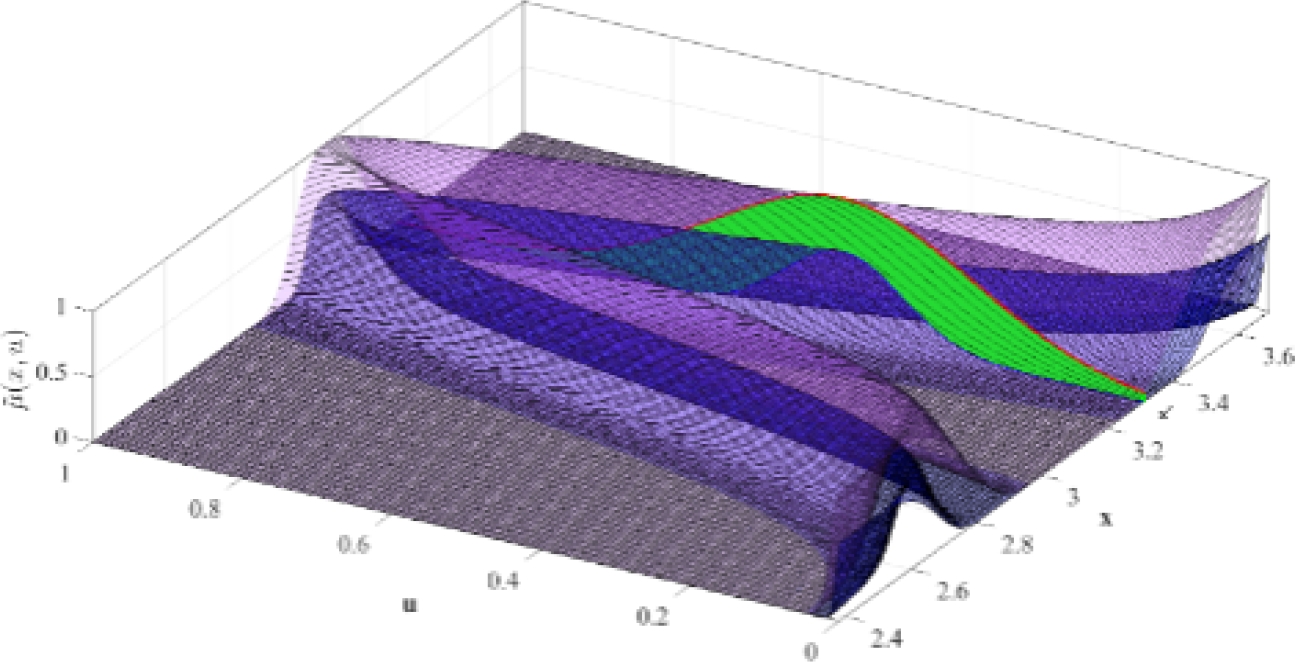
Interval Type-3 fuzzy logic systems (I-T3FLSs) were proposed to improve performance in an environment with too much noise when type-2 and type-2 are unable to achieve the best results. T-3FLSs can manage a variety of data, ranging from ambiguity to significant uncertainty. This part outlines the key distinctions among these types of fuzzy sets (Fs). The description of type-1, type-2, and type-3 Fs are expressed in a succinct way in (1), (2), and (3), respectively:
These methods are named generalized Fs, and as can be seen, with the progression of the Fs, the definitions are more complex, handling vagueness, uncertainty, and second-order uncertainty, respectively.
Type-3 Fs [6, 7, 12, 32, 35], defined by
where
3 Fuzzy logic in EAs
EAs are methods that mimic biological evolution to solve complex optimization problems [51]. These algorithms include GA, GP, CA, ES and DE methods [3, 24, 33, 46, 53], and genetic programming (GP). They operate through iterative processes of selection, mutation, and recombination, gradually evolving populations of candidate solutions toward optimal or near-optimal results. Fuzzy Logic(FL) has been used for parameter adaptation of EAs. With this idea, fuzzy systems can dynamically adjust important parameters in EAs, manage uncertainty, and improve decision making under imprecise conditions. The main roles of in EAs include: Parameter Adaptation: EAs must manually or heuristically adjust important parameters to achieve good convergence, such as mutation and crossover rates. With a fuzzy system, it is possible to adapt these parameters according to performance metrics, improving convergence speed and performance [47]. Fitness function: In several real-world applications, defining an exact fitness function is challenging due to uncertainty in the evaluation mechanism. It is capable of approximate reasoning, allowing EAs to effectively manage vague or incomplete fitness information [14]. In addition, it is possible to avoid premature convergence and improve diversity in the population. Multi-Objective problems: Evolutionary multi-objective algorithms can present conflicting in the different objectives. Fuzzy systems can help to make optimal decisions under uncertain conditions [42].
3.1 Applications of in EAs
The integration of into evolutionary algorithms has been realized in many areas, including: Engineering Design Optimization: Has been used in structural design, material selection, and product design, to optimize mechanical and civil engineering problems [26]. Financial Forecasting: Fuzzy genetic algorithms have been used to predict stock market trends and optimize investment portfolios [15]. Robotics and Control Systems: Fuzzy system EAs are widely used in robotic path planning, adaptive control, and intelligent navigation systems [44]. Medical and healthcare care: Fuzzy EAs can help diagnose diseases, plan personalized treatment, and process medical images [29]. Logistics Optimization: Fuzzy evolutionary strategies optimize scheduling, inventory management, and transportation planning in complex logistics Nts [27]. In recent years, many evolutionary algorithms and systems have been created, with the objective of obtaining the best possible results in complex problems. As indicated in Table 1, we are showcasing the papers most frequently referenced that utilize EAVs.
Table 1 Years, authors, references (Ref) and citations of fuzzy logic in evolutionary algorithms
| Year | Authors | Ref | Citations |
| 2008 | Herrera, F. | [23] | 499 |
| 2011 | Valdez, F. et al. | [50] | 208 |
| 2009 | Lin, L. et al. | [31] | 173 |
| 1997 | Cordón, O.,Herrera, F. | [19] | 172 |
| 2012 | Cheng, M.-Y. et al. | [16] | 127 |
| 2010 | Cheng, M.-Y. et al. | [18] | 126 |
| 2009 | Gacto, M.J. et al. | [21] | 117 |
| 2011 | Castillo O. et al. | [9] | 115 |
| 2009 | Valdez et al. | [49] | 108 |
| 2009 | Cheng, M.-Y. et al. | [17] | 107 |
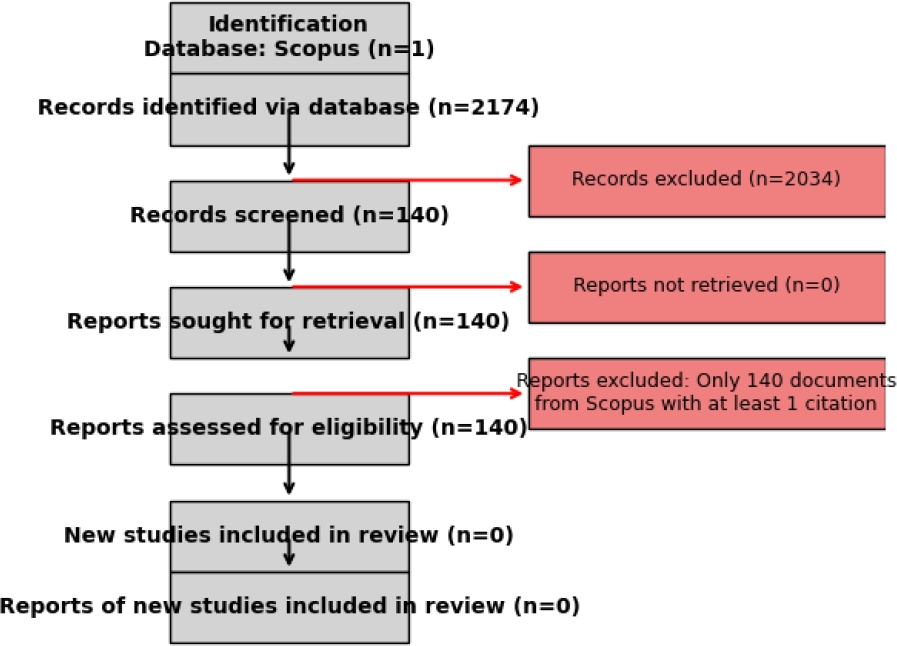
The publications listed in Table 1 were sourced from the Scopus database. It is notable to see how many new studies have emerged in the last few years. To build Table1, we focused on the topic ’fuzzy logic evolutionary algorithms’ to effectively identify relevant articles for this review. With this search, the total number of publications from the Scopus database was 2174. However, not all publications were considered in Table 1; the top 10 papers most cited were reported out of 140 articles found on this topic. However, in Figure 2, a Preferred Reporting Items for Systematic Reviews and Meta-Analysis (PRISMA) is shown [41] considering the total number of records retrieved from Scopus.
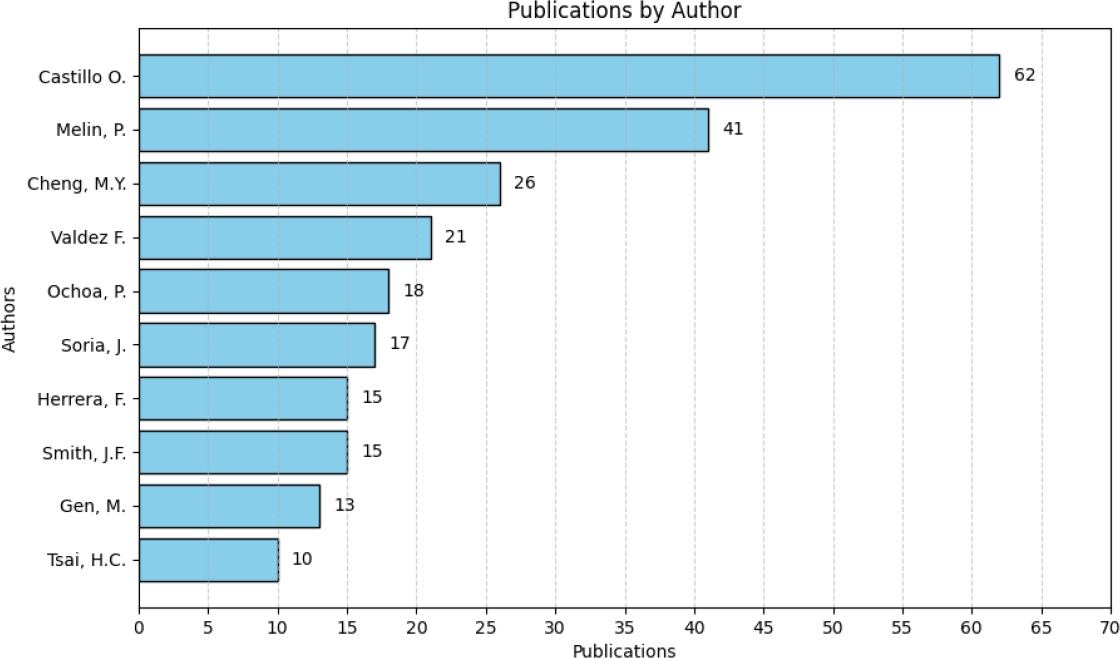
In addition, from the Scopus information we can build Figure 3, which shows a plot with the top 10 authors by number of publications. In this figure, it is shown that the number of publications of each author is not necessarily equal to the Top 10 authors with more citations presented in Table 1.
3.2 Type-1 Fuzzy Evolutionary Algorithms
This part describes several questions used to explore the Scopus database for an in-depth analysis of the literature related to the chosen subjects. In Table 2, the Top 10 with more citations of the query ’Type-1 Fuzzy Evolutionary Algorithms’ . In total, 72 articles from the Scopus database for the search with this subject. However, to build this table, we applied a filter by authors with at least 3 publications, resulting in 22 publications considered with this query. Also, in Figure 4, a plot with the top 10 authors by number of publications is shown.
Table 2 Years, authors, references and citations of fuzzy logic in evolutionary algorithms
| Year | Authors | Ref | Citations |
| 2008 | Konar, A. | [28] | 318 |
| 2011 | Castillo, O. et al. | [9] | 115 |
| 2018 | Muhuri, P.K. et al. | [37] | 80 |
| 2019 | Castillo, O. et al. | [10] | 70 |
| 2015 | Martínez-Soto, R. et al. | [34] | 62 |
| 2019 | Castillo, O. et al. | [13] | 55 |
| 2020 | Ochoa, P. et al. | [39] | 53 |
| 2019 | Guzmán, J.C. et al. | [22] | 44 |
| 2019 | Castillo O. et al. | [11] | 40 |
| 2014 | Cortes-Rios, J.C. et al. | [20] | 35 |
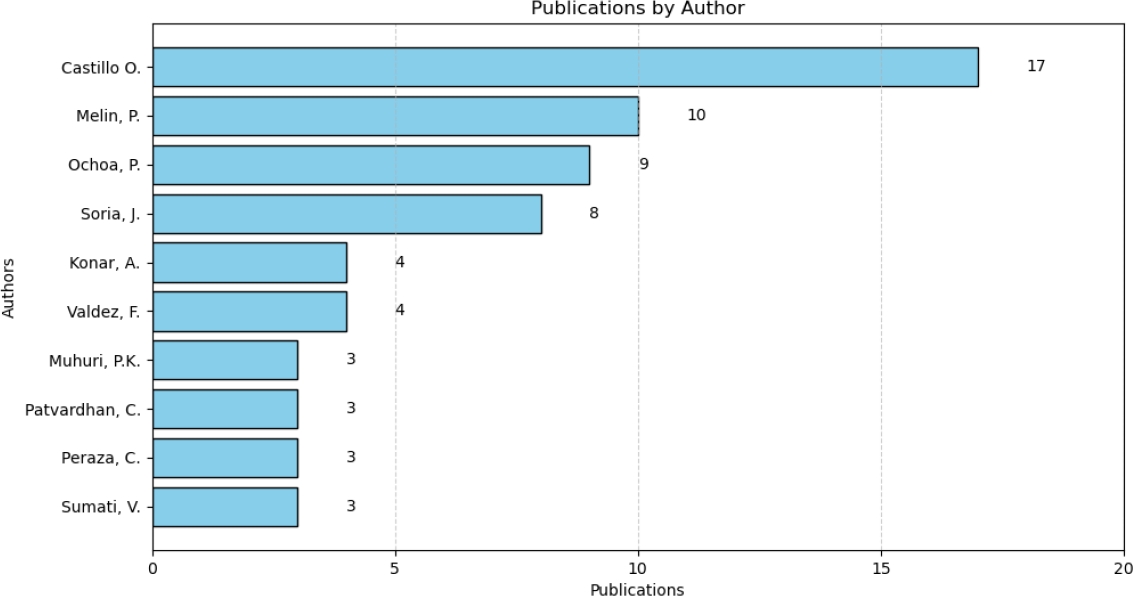
In Table 2, we showcase the highly referenced studies that utilize evolutionary algorithms and associated systems. The data featured in Table 1 was sourced from the Scopus database. It is noticeable that numerous recent publications have emerged in the past few years. To make Table2, we employed the search term ’Type-1 Fuzzy Evolutionary Algorithms’ to effectively locate relevant articles for this review. Using this search term, the system identified a total of 41 publications. However, not every publication was included in Table 2; only the ten most cited papers from the 28 articles related to this subject were selected.
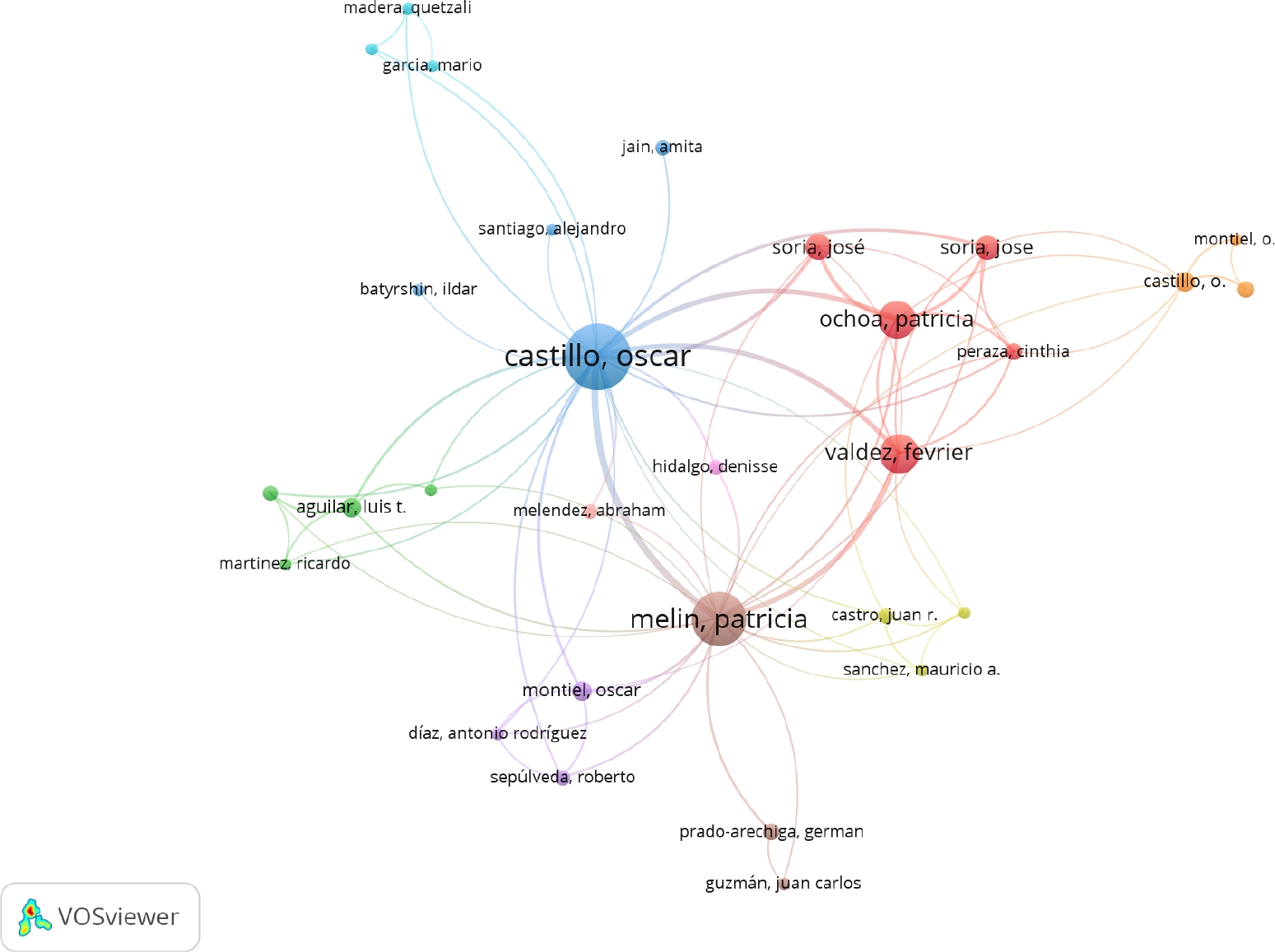
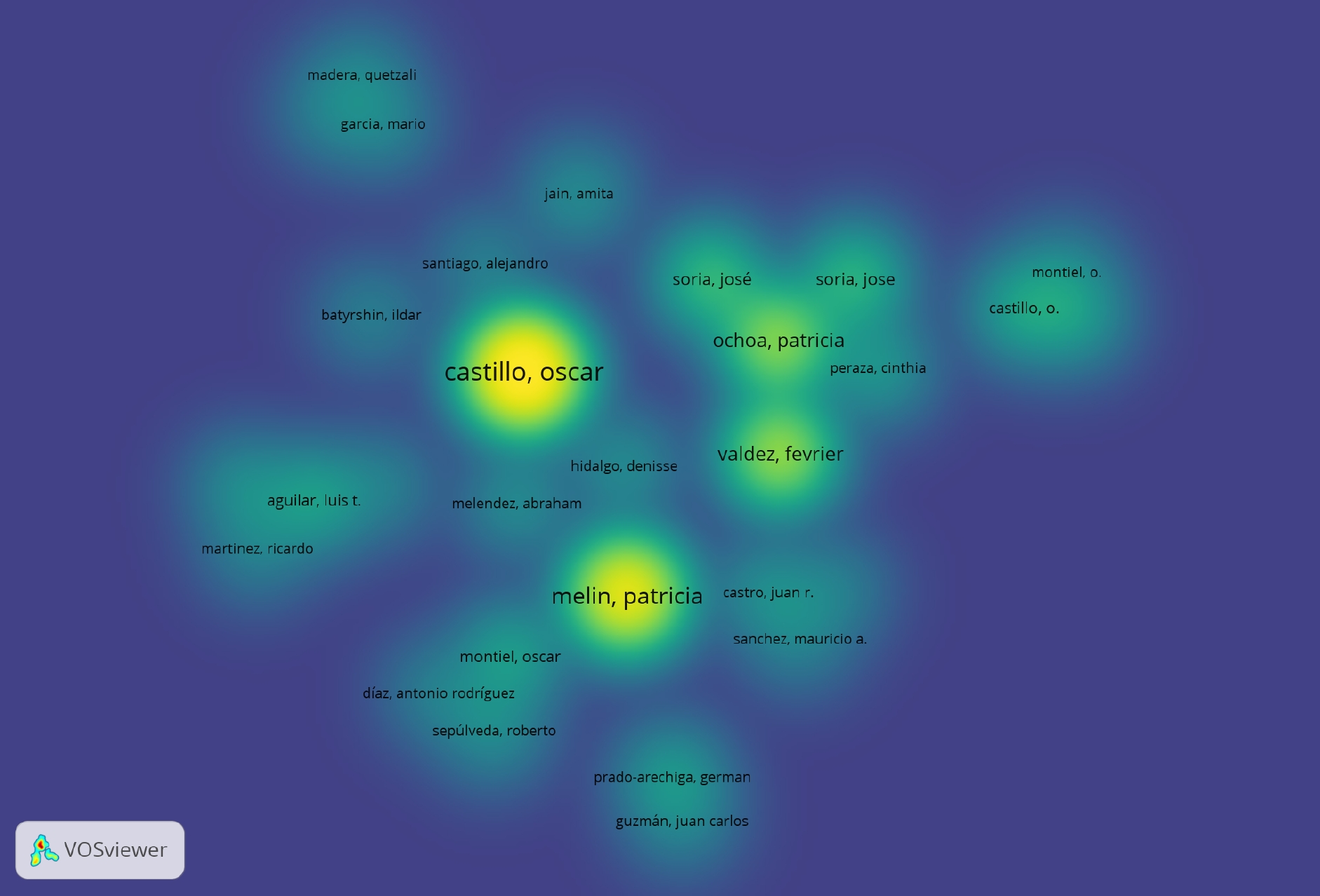
Figure 5 shows the Network (Nt) with Strength links (Sl) and occurrences, with the queries used to find the information from the used database. This information was saved in a csv file to buildthe Nt in Vosviewer program to make Figure 5 and 6. In addition, Figure 8 shows, in detail, the density (Den) of the clusters, where researchers who work with and evolutionary algorithms are appreciated. Figure 6 remark the authors with more articles, highlighting their importance in this context. For this Nt, the citations were not considered for all authors in Figures 5 and 6. Of the 4793 authors, 663 met the threshold and Sl were calculated. In conclusion, the researchers who take the highest Sl were chosen for the analysis.
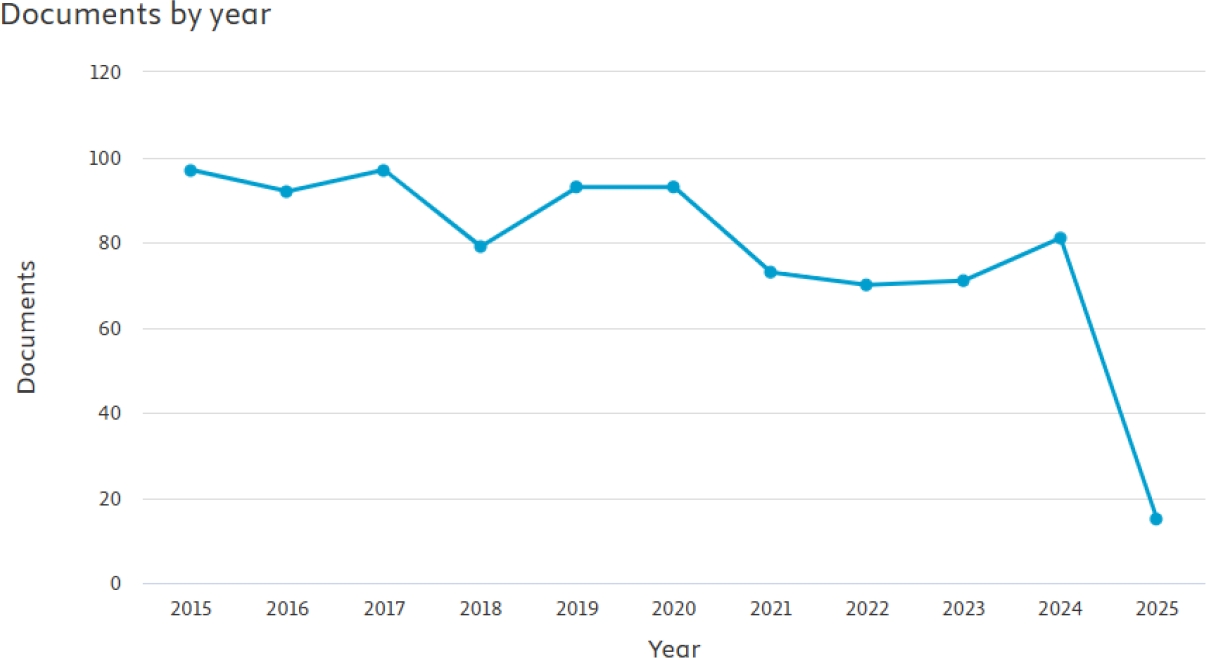
Additionally, we examined the Scopus database to analyze the publications by authors. In Figure 7, it is evident that the publication rate has seen an upward trend in the last few years. The leading 10 rankings emphasize the volume of papers associated with fuzzy logic with evolutionary algorithms.
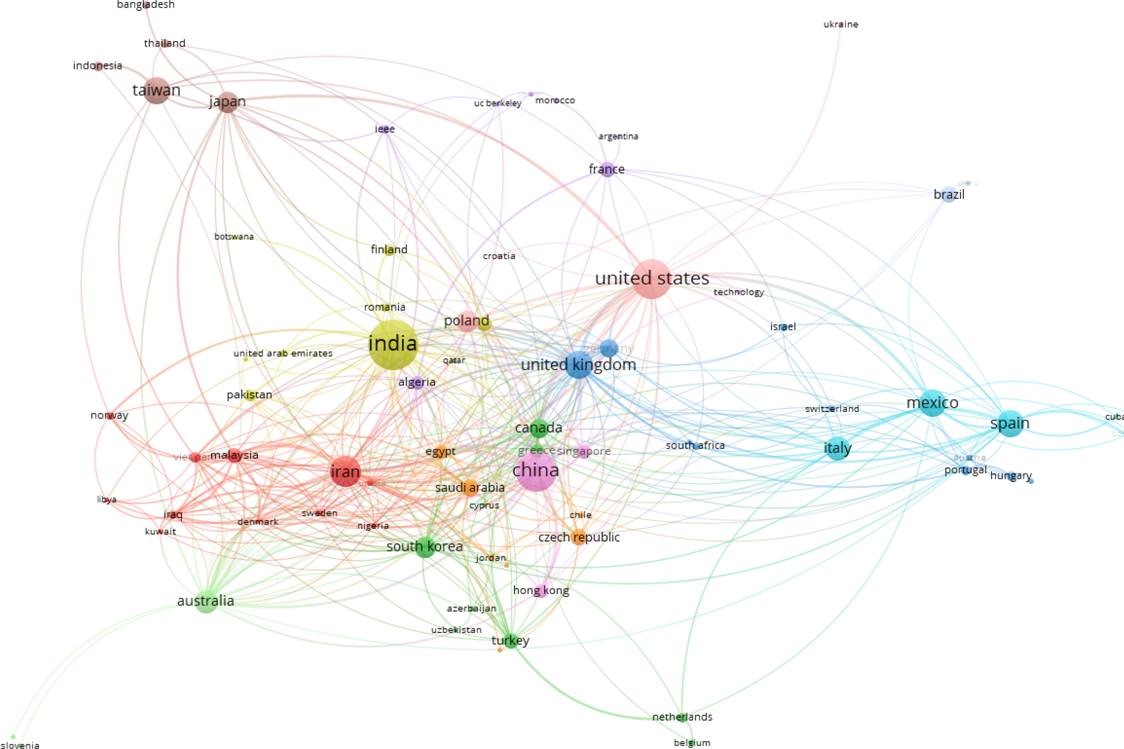
Furthermore, in Figure 5, displays the Nt, the Sl, and the corresponding countries, using data sourced from the Scopus database. In Figure 8, highlights the nations with the highest citation counts and publication numbers, where India, China, the United States, Iran and Spain stand out as the top 5 countries with the most citations according to this analysis. In Table 3, we can see the 20 countries listed based on the overall strength of their links. Moreover, it is possible to examine the count of articles and citations for more comprehensive insights into each. The total Sl of authors from 58 different countries collaborating with others was computed. For each of the 58 countries, the total Sl of the authors was calculated with other countries.
Table 3 Country, papers, and citations of with evolutionary computing
| Country | Papers | Citations | TLiSt |
| India | 352 | 5426 | 70 |
| China | 226 | 5259 | 82 |
| United States | 212 | 4912 | 106 |
| Iran | 134 | 3251 | 76 |
| Spain | 103 | 2649 | 44 |
| Taiwan | 104 | 2488 | 23 |
| Italy | 81 | 2387 | 30 |
| Mexico | 103 | 2029 | 34 |
| Malaysia | 31 | 1787 | 47 |
| Australia | 73 | 1733 | 70 |
| Canada | 52 | 1668 | 49 |
| Greece | 26 | 1292 | 20 |
| South Korea | 64 | 1199 | 54 |
| Thailand | 3 | 112 | 16 |
| Finland | 20 | 1148 | 7 |
| Hong Kong | 26 | 1114 | 22 |
| Japan | 65 | 1077 | 41 |
| Saudi Arabia | 45 | 1057 | 47 |
| France | 33 | 1043 | 14 |
| Poland | 62 | 976 | 23 |
| Singapore | 28 | 894 | 19 |
3.3 Type-2 Fuzzy Evolutionary Algorithms
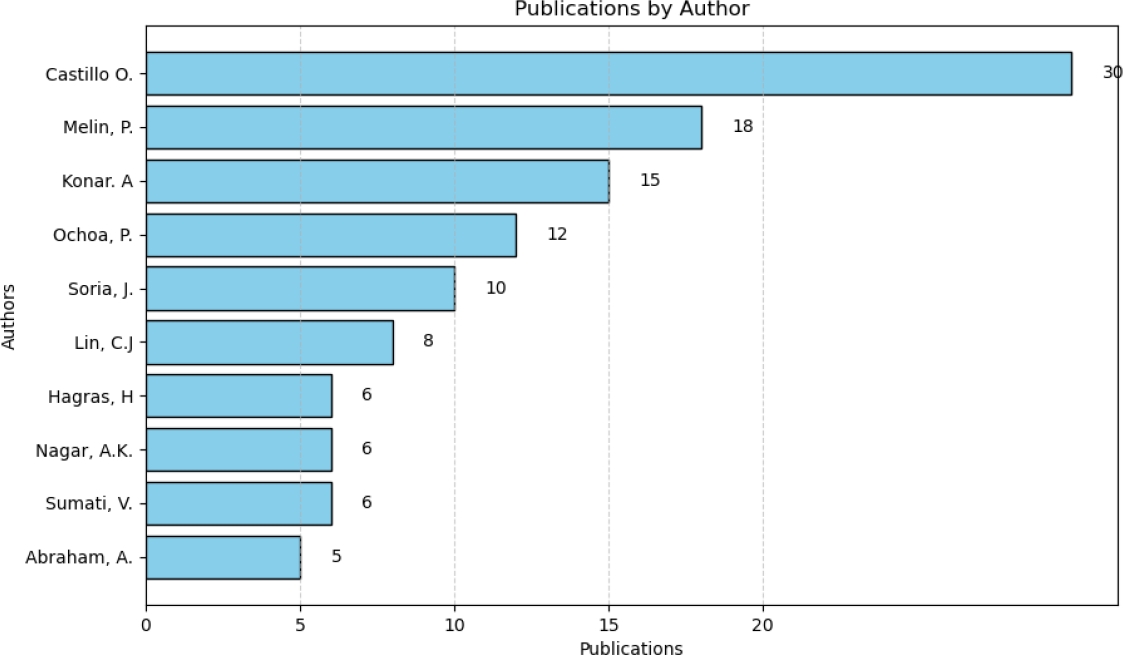
Some of the search terms used to browse the Scopus repository and review articles on the chosen topics are shown in this section. In Table 4, the Top 10 with more citations of the query ’Type-2 Fuzzy Evolutionary Algorithms’. The search on this topic yielded 203 papers in total from the Scopus database. However, we used a filter by authors who had at least three publications to construct this table, which led to 122 publications being taken into consideration. Also, in Figure 9, a plot with the top 10 authors by number of publications is presented.
Table 4 Years, authors, references and citations of Type-2 Fuzzy Evolutionary Algorithms
| Year | Authors | Ref | Citations |
| 2008 | Konar, A. | [28] | 318 |
| 2011 | Castillo, O. et al. | [9] | 115 |
| 2020 | Moreno, J.E. et al. | [36] | 100 |
| 2017 | Antonelli, M. et al. | [2] | 70 |
| 2019 | Castillo, O. et al. | [10] | 70 |
| 2015 | Martínez-Soto, R. et al. | [34] | 62 |
| 2013 | Cara, A.B. et al. | [4] | 53 |
| 2020 | Ochoa, P. et al. | [39] | 53 |
| 2005 | Castillo O. et al. | [11] | 49 |
| 2019 | Guzmán, J.C. et al. | [22] | 44 |
3.4 Type-3 Fuzzy Evolutionary Algorithms
This part showcases several questions utilized to explore the Scopus database in order to review articles related to the chosen subjects. In Table 5, the Top 10 with more citations of the query ’Type-3 Fuzzy Evolutionary Algorithms’. Overall, there are 4 articles from the Scopus database related to this subject. Also, in Figure 10, a plot displaying the 4 leading authors with more publications is shown. We can see in this Table only 4 papers. However, this is because the search was only for the topic mentioned above. But, it is possible to make other types of queries to observe other works in different areas applying type-3 fuzzy systems. In addition, searches are based on title, abstract, and keywords. Therefore, from the Scopus database only 4 papers can be seen for this specific query.
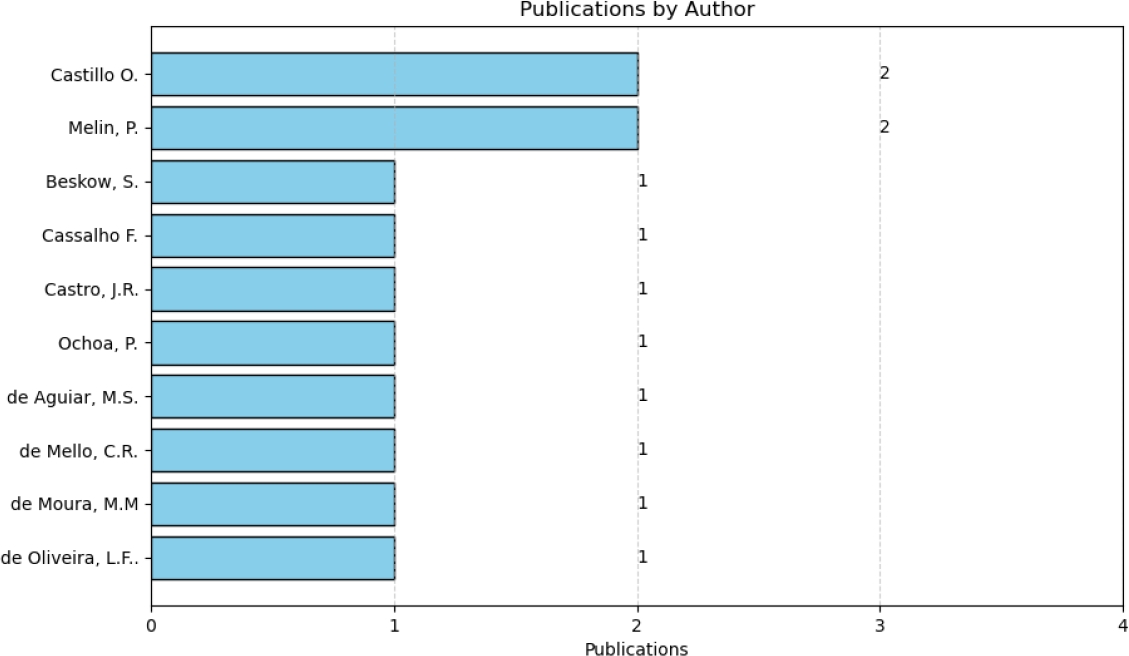
Also, in Figure 10, a plot with the top 10 authors by number of publications is presented. In this figure, the authors were selected with at least one paper with this specific topic in the title, abstract, or keywords. Therefore, not many papers were found on this query.
4 Discussion of Future Trends
After making a deep review of Scopus information the future trends for use with evolutionary algorithms combining with different types of fuzzy logic systems presented in this study. An important observation was that it was not common for authors to use the name Type-3 in title, abstract, and keywords. Future trends with type-1 with evolutionary algorithms can be hybridization with other optimization methods, combining this type of system to improve performance and achieve more robust adapting parameters with a set of fuzzy rules and membership functions. With type-2 systems with evolutionary algorithms, the trend is parameter adaptation to solve high-dimensional problems and to make adaptive algorithms that are capable of solving optimization problems in robotics, healthcare, path planning, etc. Finally, with this study, we can review the trends with type-3 systems, which can be used in the future in quantum and bio-Inspired Optimization. We found that this type of fuzzy systems is being accepted in the control area. In addition, there are research trends in control and image quality applications that use type-3 fuzzy sets. Although still in early research stages at this moment.
5 Conclusions
Based on the articles that have been published, with this study we can observe how the authors use in the title, abstract, and keywords more common the name fuzzy systems in a general way instead of a particular definition as type-1, type-2, or type-3 fuzzy systems. Furthermore, use the collected information from the Scopus database and choose the articles relevant to this study that apply evolutionary algorithms in conjunction with fuzzy systems of type-1, type-2, and type-3. We can conclude that this combination is every day more common and is used for solving many problems in several areas. Therefore, the increase in publications around the world is remarkable. Furthermore, we have built Nts, groups, and connections globally for scientists engaging in these techniques. However, the generated Nts in the paper show that applications such as control have been developed with type-3 fuzzy systems. The main limitations for this work, is that this study was based on the Scopus database, which is not the only existing database to obtain the information, However, it is the biggest data set currently available. Other resources, such Web of Science or Google Scholar, can be taken into consideration to examine the many papers in relation to this review. With this reference, in the future, other queries from other databases can be studied with this type of software to classify the works from other sources. For example, with CiteSpace software, which is a free software used to analyze trends and obtain a general idea about the different approaches. With this paper, researchers can observe the trends of this type of methods in many applications, specifically evolutionary algorithms.

